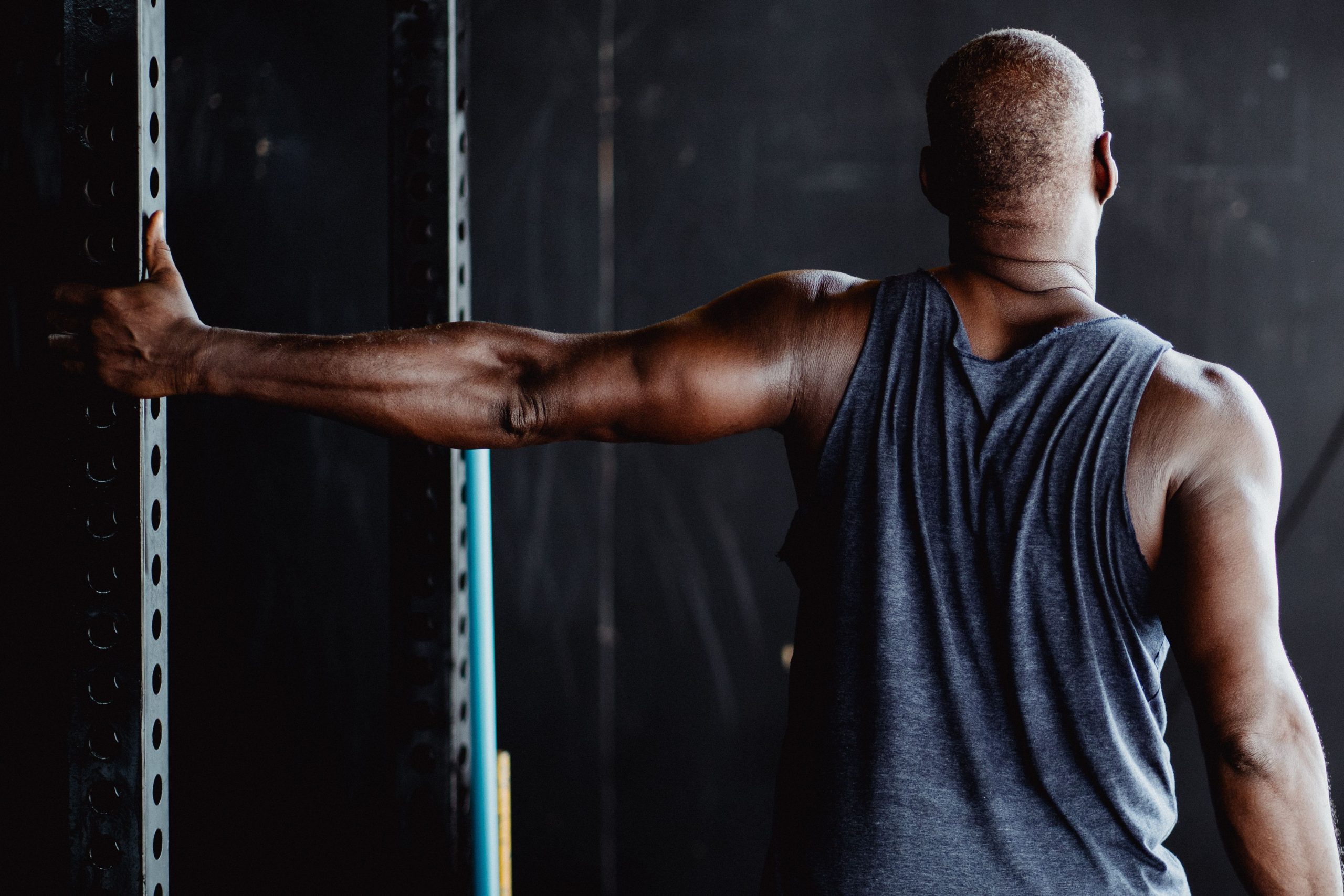
The shoulder blade moves whenever the arm reaches, lifts or pulls. That sounds obvious until a workout starts and the only thing anyone watches is the hand. In a low-to-high reverse cable fly, the arm travels out and up while the shoulder blade helps organise the movement. The exercise can give the upper back and back of the shoulder a useful load. Understanding what the shoulder blade is doing makes it easier to choose a sensible weight and recognise when the movement is turning into a shrug or a swing.
Scapular stabilisation does not mean pinning both shoulder blades down and back for every repetition. They need to move as the arms move. For a person returning to training after shoulder discomfort, the aim may be to make that motion feel controlled and comfortable. For a regular gym-goer, it may be to give a neglected pulling pattern a place in the programme. Both are reasonable goals, but neither requires a claim that one exercise will prevent all shoulder problems.
Give the shoulder blade room to move
The scapula is the flat bone that sits on the back of the rib cage. Muscles around it help the arm reach forward, travel overhead and draw back. The trapezius, serratus anterior and rhomboids are among the contributors, but no one muscle works alone. This is why a single cue such as “squeeze your shoulder blades” cannot describe every useful arm movement. In one part of a lift the blades may come closer together; in another they need to turn or slide.
Try a simple unloaded observation before adding a cable. Stand comfortably and reach one arm forward, then bring it back. Notice the shoulder blade moving on the ribs rather than trying to freeze it. Raise the arm through a comfortable range and feel how the position changes. You are not grading the motion as correct or incorrect from a mirror. You are learning what a smooth, manageable movement feels like for you. If the arm cannot move without sharp pain, the next step is an assessment, not a stronger cue.

The same idea applies to rowing and pulling exercises. Some people find it helpful to begin a row by allowing a little reach and then drawing the arm back while the blade moves with it. Others may need a more supported position while they learn the path. Holding the scapula rigid throughout can make an otherwise simple row feel awkward. On the other hand, letting the shoulder roll forward suddenly under a heavy load can remove control. The useful middle is a movement you can repeat without yanking or bracing excessively.
People often notice shoulder movement after a long day at a screen in Melbourne CBD. That observation does not prove that desk work has damaged the shoulder or that a perfect posture will fix it. A workday with few changes of position may simply leave less variety in how the arms are used. A few comfortable reaches, a walk and a planned strength session can all be part of giving the shoulders more movement. The cable fly is one training option within that wider picture.
Use the cable fly as one example
The low-to-high cable fly is one way to feel the shoulder blades move as the arms travel outward and upward. Start light enough to notice the motion without chasing a heavy stack. You may feel the blades change position on the ribs as the hands rise and return. Let that happen rather than pinning them together throughout. The exercise is useful here as a moving example, not as a test that assigns a score to the shoulder blade.
Compare that with a row. In a row, the hand travels back towards the body and the shoulder blade may move differently from the wide cable arc. Then reach an arm forwards without a weight and notice the blade move again. There is no single position it must hold through all three tasks. The value of these comparisons is that they expose what your programme asks the shoulder to do. A person who only performs straight-back pulls may have little practice with reaching upwards; another may already do plenty of wide pulls.
The return of the cable fly gives another observation: as the hands come in, the blades may spread slightly around the rib cage. That is normal movement, not a failure to hold them back. If a light fly makes the neck tense or the trunk rock, lower the range or load. Then ask whether a row or an unloaded reach gives you a clearer practice movement. What matters is choosing a task that allows the arm and shoulder blade to work together, not completing the same cable exercise in every session.
The low-to-high path changes the emphasis from a standard row. A row brings the elbows towards the body and can accept more load; the reverse fly uses a wider arm path and usually needs less. If the elbows bend deeply and the hands come straight back, you may have turned the exercise into a row. That can be a good exercise, but it does not answer the same training question. Choose the path that suits your aim rather than trying to make a fly behave like a heavy row.
Put the exercise in a real programme
Scapular work is often spoken about as though it belongs only to rehabilitation. The muscles around the shoulder blade matter in ordinary training too, but they do not need a separate elaborate routine every time you lift. A few well-chosen pulls, presses and reaches may give them plenty to do. The cable fly can add a specific outward and upward pulling task when your programme contains mostly straight-back rows or pressing. It does not replace those other movements.
Start with enough repetitions to learn the arc while you still have control. If you find yourself heaving the weight by the end of a set, shorten the set or reduce the load next time. You can progress by making the path smoother, using a slightly larger comfortable range or adding a small amount of resistance. Do not change all three at once. The shoulder may tolerate a light cable arc well even if a heavy press is currently difficult; the reverse can also be true. Exercise choice should follow the actual response rather than an assumed hierarchy.
If you have been away from training, a light fly at the end of an upper-body session may be a clearer first experiment than adding several new shoulder drills. If you already perform it, consider whether it still serves a purpose. Are you feeling the upper back work while the movement stays controlled? Is the range repeatable? Are you simply chasing a burning sensation with heavier and heavier sets? The last option is not a useful goal by itself. The fly should support the work you want the shoulder to do elsewhere.
A programme also needs room for rest and for the demands outside the gym. Someone lifting boxes at work may already place considerable load through the shoulders. Someone who swims or plays a throwing sport will have different exposures. A cable exercise cannot be prescribed by name alone without considering those activities. This is one reason to keep the first dose modest and pay attention to how the shoulder feels later that day and the next morning.
When the shoulder needs individual attention
A shoulder blade that looks different on one side is not, by itself, a diagnosis. People have normal differences in shape, strength and movement. Persistent pain, loss of motion, weakness or a shoulder that repeatedly feels unstable deserves a closer look. Seek prompt medical care if pain follows a fall, the joint looks deformed, you suddenly lose movement or the area becomes hot and swollen. Do not use a cable exercise to work around those warning signs.
For less urgent symptoms, an assessment can look at the whole task: the shoulder, neck and trunk; the way you lift; and the amount of work already in your week. At Principle Four Osteopathy we use movement assessment and exercise rehabilitation to help choose an appropriate challenge. That may mean a lighter fly, a different row or another starting point. If shoulder discomfort is disrupting training or ordinary work, you can book online to discuss it at our Collins Street clinic.