It is easy to give a stiff-feeling hip a single instruction: stretch it. Sometimes a comfortable stretch is useful, but it answers only one part of the question. A reverse hyper asks the hip to produce and control extension while the trunk remains reasonably steady. The posterior hip stretch offers a gentler way to explore movement at the back and side of the hip. They can belong in the same broader plan without pretending that one prepares everyone automatically for the other.
This matters when a person wants to return to gym training after a spell of discomfort, or when walking and standing through a long workday leaves a hip feeling different from usual. The feeling alone does not identify a tight joint capsule or a weak muscle. It helps to notice what the hip can do: move into a position, return from it, and handle the demands of the activity that matters to you. That approach is more useful than stretching harder every time the area feels reluctant.
Decide what the stretch tells you
The posterior hip stretch in the linked P4O guide uses a hands-and-knees position, with one leg crossing behind to the opposite side and the hips shifting gently in the direction of that crossed leg. In this programme its role is brief: notice whether that position feels comfortable, then compare it with an active hip-extension movement. A floor stretch can feel easy while lifting the leg against resistance feels difficult. That difference is more useful than spending the whole warm-up trying to increase the stretch. If the knees or wrists dislike the setup, choose another way to begin.
What you feel here is only one piece of information. The stretch does not measure how much force the gluteals can produce, how well the hamstrings work or whether the trunk can stay steady while the legs move. It also cannot diagnose a tight joint capsule by itself. An easy stretch followed by a poor lifting pattern suggests that more stretching may not answer the training question. Use the next low-load strength repetition to find out what needs attention.
If the stretch creates a sharp pinch, discomfort down the leg or a worse response afterwards, stop using it as your warm-up. A gentle hinge or bridge may provide a clearer starting point for a hip-extension session. In a gym, the first few unloaded repetitions can also show whether you can move the hip without turning the exercise into a lower-back arch. These are practical observations, not a pass-or-fail screen. You can train a comfortable range while leaving an unhelpful stretch out.
The transition from mobility to loading is worth noticing. Compare the sensation at the back of the hip with what happens when the leg moves behind you under its own effort. Does the gluteal area take part, or do you feel the work almost entirely in the lower back? Can you return the leg slowly? These questions point towards the aim of the reverse hyper. If the first active movement feels worse, reduce its range or choose another option. Temporary looseness is not a reason to jump straight to heavy resistance.
Give hip extension a job to do
The reverse hyper is a hip-extension exercise performed with the torso supported and the legs moving behind the body. The gluteal and hamstring muscles contribute to lifting the legs. The trunk still has to remain organised so that the movement does not become a hard arch through the lower back. If you use a reverse-hyper machine, begin with a small, controlled range and a light load. The equipment should be set up securely, and a demonstration helps if you have not used it before.
Think about where the movement starts. If the chest lifts and the lower back arches before the legs move, you may be using the spine to create the appearance of hip extension. Reduce the range and try again. The legs do not need to fly high. A lower lift that allows you to feel the hips doing the work can be a better starting point. Come down under control instead of letting the legs swing and then rebound into the next repetition.
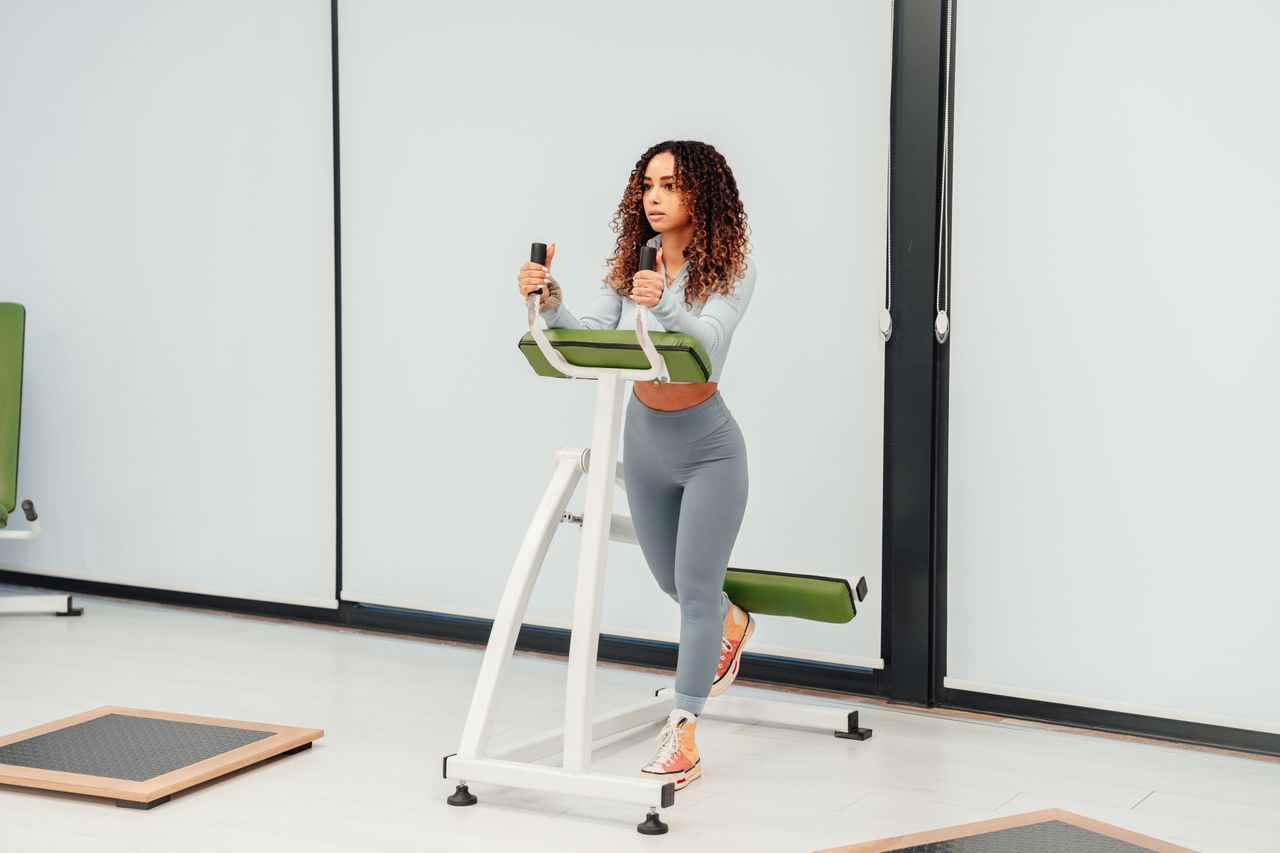
The reverse hyper can be tempting to perform with momentum, especially once the load increases. That may make the set look energetic, but it can obscure whether you can control the movement in both directions. Pause long enough between repetitions to notice the start and finish. If your breathing becomes held or the back feels compressed, lower the challenge. You can build useful strength without turning every set into a maximum-effort swing.
Not every gym has this machine, and it is not necessary for training hip extension. A bridge, a hinge or another supported hip movement may fit the same broad goal while asking different things of the body. The reverse hyper is one option, not an essential step after a stretch. If the machine position is uncomfortable or you cannot set it up safely, choose a more accessible exercise. What matters is the movement and the load you can manage, not the brand of equipment.
Put mobility and loading in the right order for you
The stretch may help you learn what the back of the hip feels like in a gentle position. The reverse hyper then asks for active work in another direction. They are not a matched pair in the sense that everyone must stretch before strengthening. Some people feel better moving through a few easy hip hinges before training. Others like a brief stretch after a long sitting period. Choose an order that supports the session you are actually doing.
If you have been away from exercise, keep the first strength effort modest. The gluteals and hamstrings may tolerate a movement well during the set yet feel unusually sore the next day. That does not mean the exercise is harmful, but it can signal that you added more work than your current week could absorb. Start with a range and number of repetitions that leave room to return to normal walking, stairs and training. Then progress one feature at a time, such as range, repetitions or resistance.
The same careful approach applies to the stretch. Do not use a strong pull to compensate for a rushed strength session, and do not treat a temporary feeling of looseness as proof that the hip is ready for a heavy load. Try a few unweighted repetitions of the actual movement you plan to perform. Can you hinge, step or extend the hip without a sharp symptom or a large back movement? That observation is more relevant than how far you can push the leg across the floor.
One hip may feel different from the other. That information can guide the starting range, but symmetry is not the only goal. A person with a previous injury, a different training history or a demanding job may have several reasons for a difference. Track whether the exercise becomes more comfortable and controlled over time. If the gap widens, or one side repeatedly provokes pain, an assessment can help avoid guessing.
Pain at the hip can also come from the back or other nearby structures. A stretch and a reverse hyper cannot determine the cause. New or severe pain, symptoms after a fall, inability to bear weight, marked swelling or fever call for medical advice promptly. Do not try to lift through those signs. For persistent but less urgent discomfort, an individual assessment can look at the movement, strength and activity demands together.
Our team at Principle Four Osteopathy can assess how the hip moves and help you choose a suitable level of rehabilitation or strength work. That may involve changing the stretch, selecting a simpler hip-extension exercise or adjusting training around the rest of the week. If hip discomfort keeps interrupting your workday or exercise, book a visit at our Collins Street clinic and we can look at it together.