Upper-body training can become repetitive without anyone intending it. Presses, push-ups and bench work are easy to recognise and measure, while the back of the shoulders may receive less deliberate attention. A low-to-high reverse cable fly offers a controlled pulling exercise for the shoulders and upper back. The Zuu rock press asks for a close-hand bodyweight push, with particular emphasis on the triceps. They do different jobs, so combining them can add variety to a programme without pretending that one is the opposite or replacement for the other.
That distinction is useful for people who spend much of the day at a computer and then train before or after work in Melbourne CBD. The answer to a sedentary day is not to do the hardest possible upper-body session. It is to choose movements you can perform with control, increase the challenge gradually and notice how the shoulders, elbows and back respond. Neither of these exercises is a treatment for every ache. The fly shows how to load a pulling arc with a cable; the rock press shows how body position can change a push.
Give the upper back a clear job
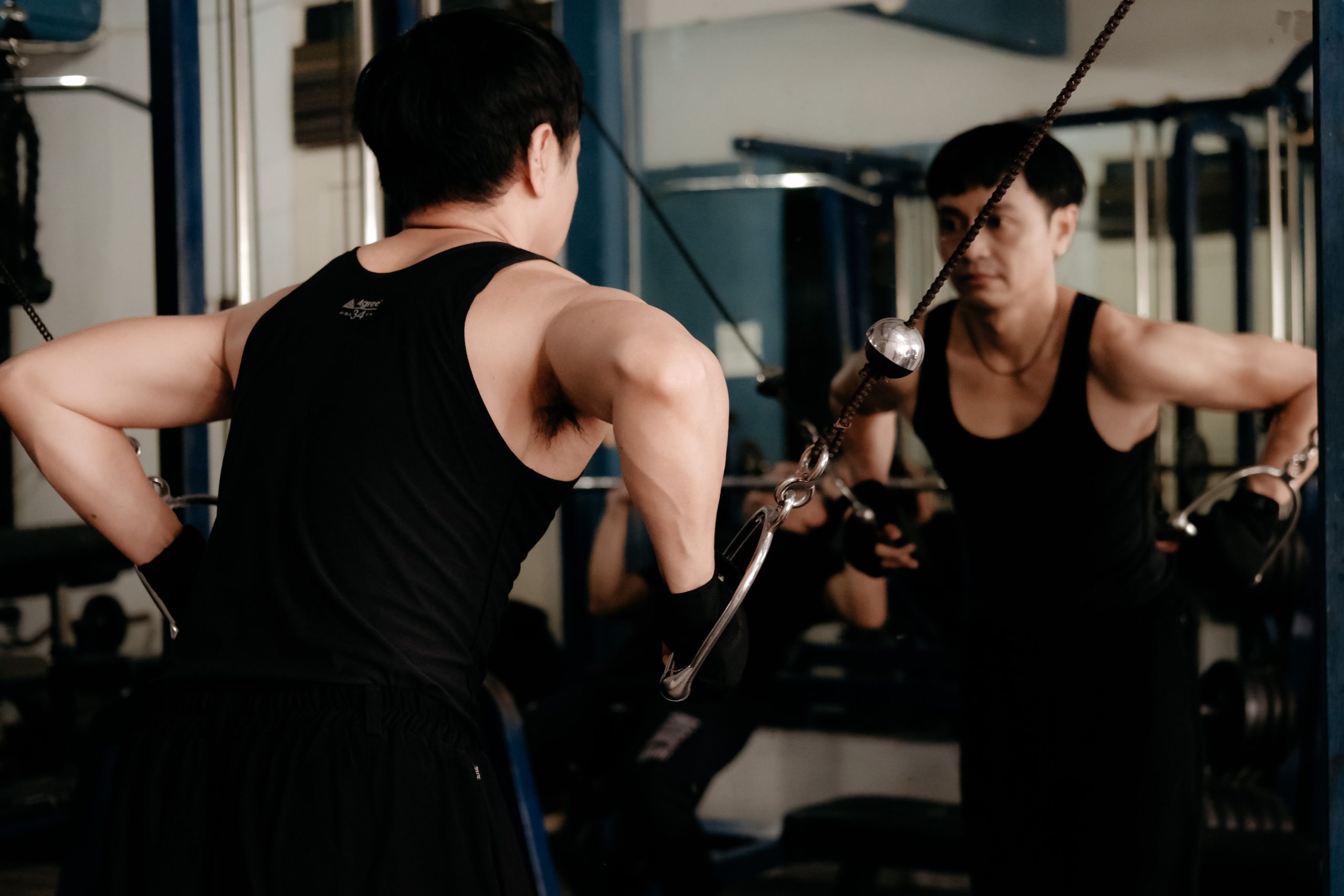
In the low-to-high reverse cable fly, the hands travel outward and upward against cable resistance. This asks muscles around the shoulder blades and the back of the shoulders to help control the movement. The cable gives a steady line of resistance, but it is easy to use too much weight and turn the exercise into a swing. Start with a light load that lets you move through a comfortable available range. The quality of the arc is the point, rather than the number on the stack.
Set yourself in a stable stance and begin where the arms can move without the shoulders feeling crowded. Draw the arms outward and upward in a controlled path, then return without letting the weight pull you back suddenly. You do not have to reach an identical end position to the person in a demonstration. Shoulder movement differs between people, and the useful range is the one you can repeat without pinching, shrugging hard or twisting the whole trunk to finish the repetition.
Pay attention to the return as well as the pull. If the weight drags the arms down and in, the load may be too high or the pace too fast. If your elbows bend so much that the movement becomes a row, you may have changed the task. That is not necessarily a bad exercise, but it is no longer the reverse fly you meant to practise. A lighter cable often makes it easier to feel the shoulder blades move without forcing them into a single rigid position.
Several muscles contribute to the pulling arc, but that does not mean one cable fly covers every aspect of shoulder training. Its role is narrower and more useful: it gives the back of the shoulder and upper back a manageable pulling task. Other exercises may still be needed for the demands of your sport, work or lifting programme. It is also possible to make this exercise difficult without making it more productive. If the full arc disappears when the weight rises, lowering the load is a sensible adjustment.
Let the rock press be a controlled push
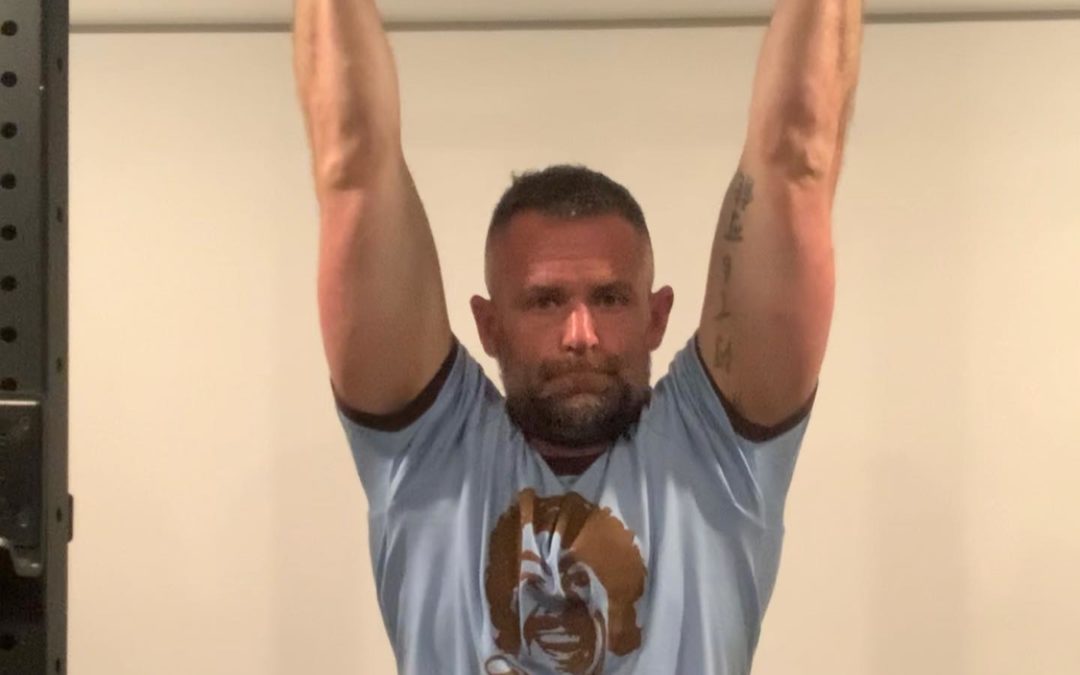
The Zuu rock press shifts attention to a bodyweight press. Place the hands close together to put more emphasis through the triceps. The body rocks through the movement while the trunk remains organised. Because it combines pressing with a change in body position, it can feel unfamiliar even to someone who does ordinary push-ups. Begin with a small self-selected range instead of trying to copy the largest motion you have seen.
Think about the position of your back and hips as you move. The aim is a comfortable neutral position that you can maintain through the rock, not an exaggerated arch or a forced tuck. If tight hamstrings make the position awkward, a slight bend at the knees may help. It is an option, not a correction everyone needs, and it should make the movement easier to control rather than simply allowing you to push farther into discomfort.
Hand position deserves attention as well. Bringing the hands close changes the demands at the elbow and shoulder. It may give the triceps more work, but closer is not always better if the wrists or elbows complain. Set the hands at a distance that lets you press without sharp pain and keep the shoulders from collapsing towards the ears. If the rock becomes a rushed drop into the arms, shorten the movement. The exercise should still look and feel like a deliberate press when you are tired.
A person new to the rock press may benefit from first practising a familiar push-up variation at a comfortable level. That gives a clearer sense of how much pressing load the arms tolerate before adding the rock. It is also reasonable to leave the rock press out when its setup does not suit a current shoulder, wrist or elbow problem. An exercise does not earn a place in the programme simply because it is novel. The useful version is the one that fits the training purpose and can be repeated without an escalating symptom response.
Put the movements in a sensible session
The cable fly and rock press are not a complete upper-body programme by themselves. The fly is a light pulling option with a particular arm path. The rock press is a close-hand push that also asks the trunk to manage a changing position. You could include both in the same week, but there is no need to force a perfect one-to-one ratio between them. The rest of your training, your available equipment and what you are trying to improve should guide how much of each you do.
It can help to change less of the session than you think. If your week already contains rows and ordinary push-ups, adding a light cable fly is a clearer experiment than replacing every pulling exercise at once. If you then want to try the rock press, make room for it by reducing some other pressing work rather than piling it on at the end of a tiring session. You will have a better idea of how the new movement feels when the rest of the week is familiar. That matters particularly when you are returning from a break or working around a shoulder that has been sensitive before.
If the main goal is to relearn the movements, keep the first efforts easy enough that you can notice how they feel. With the fly, that may mean reducing the stack and keeping the arc smooth. With the rock press, it may mean using a shorter range and longer rests. Progress can come from better control, a little more range or greater load later. Changing all of those at once makes it difficult to tell what your shoulders and elbows tolerated. A session that feels manageable today should also let you return to your normal activities afterwards.
There is no need to treat discomfort as proof that you have worked the right muscle. Muscle effort and ordinary fatigue are expected with training; sharp pain, loss of control or symptoms that worsen from session to session deserve attention. If pain began after a fall, the shoulder looks different, or you have marked weakness or loss of movement, seek medical assessment rather than trying to train through it. For less urgent but persistent problems, a change in range or exercise may help, but the reason for the symptoms should be considered before you simply add more sets.
At Principle Four Osteopathy, movement assessment and strength and conditioning can help connect an exercise choice to the activity you actually want to do. That might be returning to gym work, handling a physical job or building confidence after a period of reduced training. If the cable fly or rock press keeps provoking symptoms, we can look at the movement and the rest of your programme rather than judging a single repetition in isolation. Book online if you would like individual advice at our Collins Street clinic.