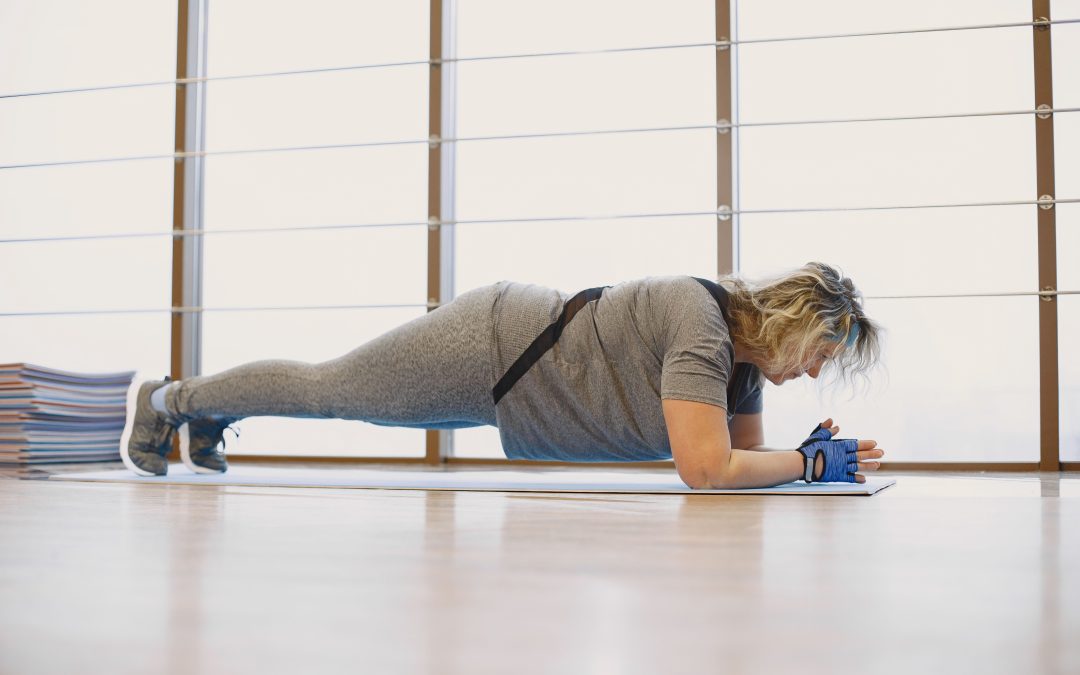
A plank is often treated as a contest against the clock. Yet the number of seconds on a timer says little about how you held the position, whether you could breathe, or what happened when you moved an arm or a hip. The wall plank and the side plank with hip and trunk drivers offer two different ways to explore that control. The wall gives you an adjustable, supported position. The moving side plank asks you to keep a lateral brace while other parts of the body move.
Those differences matter to people with different starting points. Someone easing back into exercise after a stretch of Melbourne CBD desk work may appreciate the wall because it gives them time to find a comfortable position. Someone already doing side planks may need a different challenge than simply holding them longer. Neither exercise is a universal measure of core strength, and the harder-looking version is not automatically the right one. The goal is to choose a task you can perform well enough to improve.
Find the wall plank first
Place both hands on a wall roughly in line with your shoulders. Step your feet back until you are leaning forward and your hands are taking some of your weight. The wall reduces the effort against gravity compared with a floor plank. That makes it easier to pay attention to your body position rather than spending all your energy trying not to fall out of the exercise. You should be able to keep a long, comfortable line through the trunk and hips without letting the hips drift forward into a sag.
There is no need to turn a neutral position into a rigid one. Some people try to tuck their pelvis as far as possible or squeeze every muscle at once because they have been told to keep the back straight. A steadier approach is to find an alignment you can hold while breathing normally. If you cannot speak a short sentence or take an easy breath, you may be bracing harder than the task requires. Back your feet closer to the wall or shorten the hold until the position feels manageable.
Your shoulders matter as much as your abdomen here. Keep the hands comfortably placed rather than reaching so high that the shoulders feel crowded. Press gently into the wall and notice whether one shoulder is doing most of the work. The wall plank is not just a way to avoid a floor exercise; it lets you practise how the shoulders and trunk share a load. If your wrists dislike a flat-hand position, a different support or exercise may be more suitable. The position should fit your body rather than force your body into a picture-perfect shape.
Time can be useful, but quality comes first. A 45 to 60 second wall plank with alternating hand lifts is one possible version, not a starting target for everyone. A shorter hold that keeps the hips steady and breathing normal is more useful than a long hold that ends with the lower back sagging or the shoulders tightening. If you cannot tell whether you are losing position, a mirror, a brief video or feedback from a clinician may help.
Change one point of support
Once the two-hand position feels stable, briefly take one hand off the wall. You now have three points of contact instead of four. The load shifts and your body must resist the urge to twist towards the supporting hand. Put the hand back, regain the original position and try the other side. The lift can be small; it does not need to become a large reach. The challenge is the moment of change, not the height of the hand.
Watch whether the hips stay quiet as you alternate. If lifting one hand makes the trunk swing, you have useful feedback. Try slowing down, shifting your feet a little, reducing the time the hand is away or returning to the two-hand hold. Breathing should continue. A common mistake is to hold the breath just before the hand leaves the wall, which can make the position feel stable for a moment without really teaching you to manage the movement comfortably.
Another way to change the wall plank is to lower the hands, which increases the effect of gravity. Do this gradually and only while you can keep a position you recognise. Lowering the hands and adding hand lifts together can make it hard to know which change caused a loss of control. It is easier to progress one thing at a time. Moving towards a floor plank may eventually be appropriate, but the wall version remains useful whenever the aim is to practise a supported hold or an alternating hand lift without excessive effort.
Turn to the side before adding drivers
The side plank places the body in a different relationship with gravity. Supporting yourself from the side asks the lateral trunk and shoulder to work while the hips stay lifted. Begin with a static version you can hold without the body rolling forwards or backwards. Keep the supporting elbow in a comfortable position beneath the shoulder if you use the forearm version. If a full-length side plank is too demanding, a shorter lever with the knees supported may give you a better starting point.
When the static position is steady, add movement. With hip and trunk drivers, the hips move up and down and the trunk rotates while you remain in a lateral plank. Each motion changes the load. The exercise is no longer simply about keeping still; it asks the body to respond to movement without losing the overall position. Begin with a small hip movement and a small rotation so that you can tell which part of the exercise is doing the work.
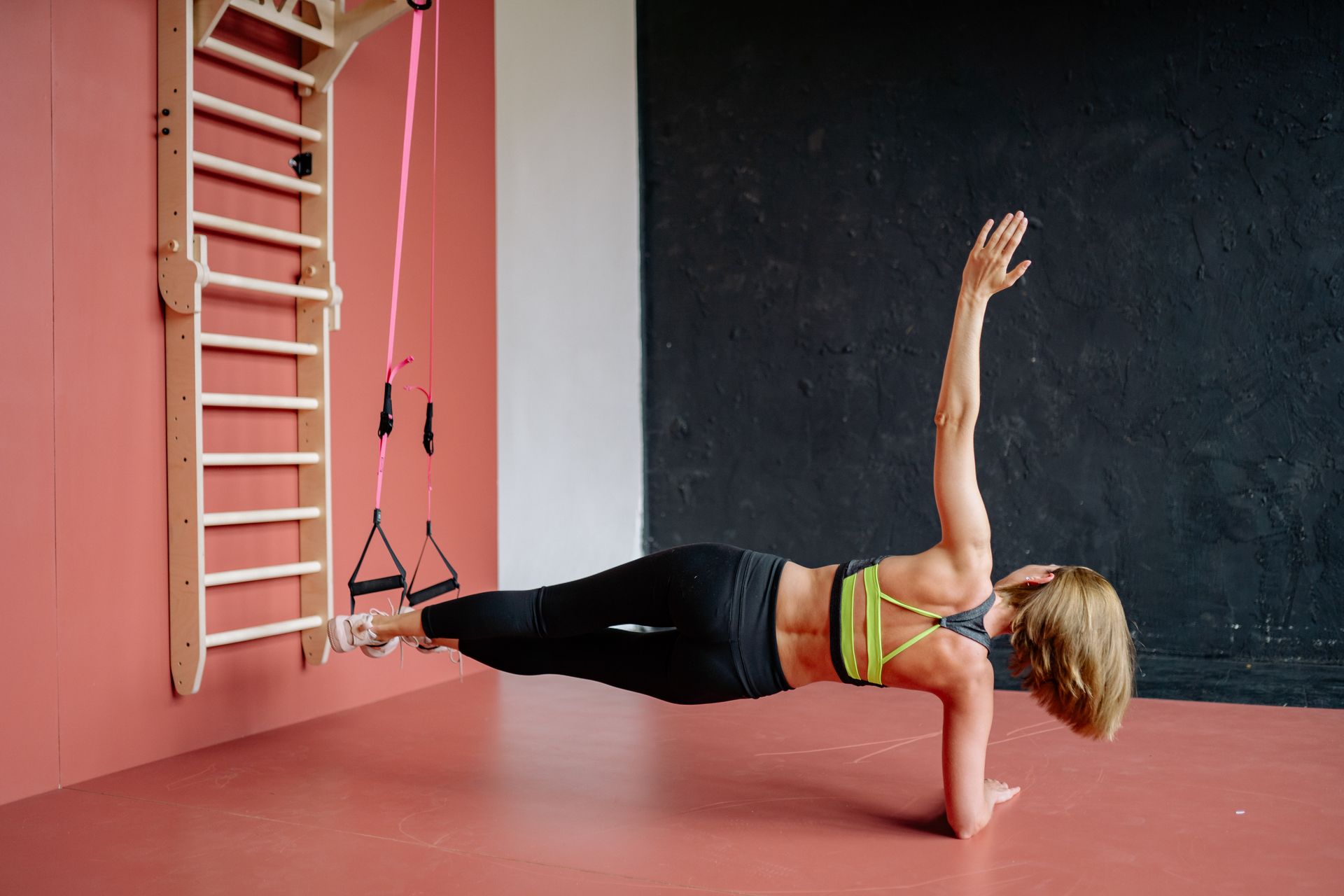
Do not assume the hip and trunk movements have to be as large as they look in a demonstration. If the pelvis drops so far that you cannot lift it smoothly, or the rotation turns into a collapse through the supporting shoulder, reduce the range. The moving side plank should be a controlled challenge, not a scramble to return to the top. A static hold can still be the right exercise if adding drivers makes the shoulder, back or hip uncomfortable.
The wall plank does not have to be a formal first stage before the side plank. They challenge different directions of control. A person may manage the wall plank easily but struggle to support themselves from the side. Another may already do side planks yet find alternating hands at the wall unexpectedly difficult to keep symmetrical. That is useful information for exercise choice, not a score. Use the variation that relates to your current goal and capacity.
Make the progression useful outside the exercise
For a desk worker, a short wall plank can be a manageable way to practise loading the arms and trunk before returning to other exercise. For a person who lifts or plays sport, a moving side plank may add a challenge to a programme that already includes static holds. Neither exercise replaces walking, lifting practice or sport-specific training. It is one part of learning to control load in positions that matter to you.
Pay attention to what changes as you practise. Can you breathe more easily without losing alignment? Can you lift a hand without the hips swinging? Can you rotate in a side plank without dropping into the shoulder? These are more informative signs of progress than adding ten seconds to a hold every week. Increase the challenge only when the movement remains controlled and settles well afterwards. If a symptom appears, reduce the task and check whether the setup, range or exercise itself needs changing.
If back or shoulder symptoms keep interrupting the exercise, or you are unsure which variation fits your return to activity, our Melbourne CBD team can assess how you move and help choose a suitable progression. At Principle Four Osteopathy, exercise rehabilitation is shaped around the person and the task rather than a single plank standard. You can book online to talk through what has and has not been working.