Two light-looking shoulder exercises can feel surprisingly different. In a standing dumbbell external rotation, the upper arm is raised and the forearm rotates against gravity. In a low-to-high reverse cable fly, the arms travel outwards and upwards against a cable. The first places a particular demand on the shoulder’s external rotators. The second involves the back of the shoulders and upper back through a wider pulling arc. Training both can be useful, but one should not be mistaken for a substitute for the other.
This distinction matters to people returning to upper-body training after discomfort as well as those who want a more varied programme. A small dumbbell may be plenty for the rotation exercise, while a cable stack that looks modest can still make the fly hard to control. The goal is not to exhaust every muscle around the shoulder in one session. It is to give each movement a clear task and choose enough load to practise it well.
Understand the rotation movement first
External rotation means turning the upper arm so the forearm moves outward or upward, depending on where the elbow is positioned. The standing version with the arm raised to about shoulder height is more demanding than a simple elbow-by-the-side rotation for many people. The upper arm has to remain supported while the forearm moves. If you are unfamiliar with the exercise, begin with the easier elbow-by-the-side version or get someone to show you the raised-arm setup before adding a weight.
For the raised-arm version, stand steadily and bring the upper arm out to a comfortable position around shoulder height, with the elbow bent to roughly a right angle. Begin with the forearm pointing forwards and somewhat down, then rotate it upwards towards the ceiling through a range you can control. Use a very light dumbbell. The elbow should remain roughly level rather than wandering forward and back to help the weight travel. The shoulder blade will move naturally, but the whole trunk should not twist to lift the dumbbell. If the position feels pinched, lower the arm or choose a different variation rather than forcing it to a textbook angle. Ask for a demonstration if the arm path is unfamiliar.
Gravity changes the challenge throughout the arc. A dumbbell that feels easy at one point may feel much heavier as the forearm rises. Start lighter than you might for a row or press. Slow repetitions help you notice whether the shoulder is doing the work or the wrist and trunk are taking over. If the elbow drops halfway through the set, the load may be too high or the raised position too tiring. Stop while the movement still looks like the exercise you intended.
The return phase needs control as well. Do not let the weight fall back to the starting position. Lower it at a pace you can guide, without trying to create a huge range by forcing the shoulder behind you. A comfortable rotation range is enough. Some people can turn the arm farther than others; comparing the top position with a video is less useful than noticing whether each repetition is smooth and whether the shoulder feels settled afterwards.
The exercise is often used in rehabilitation, but the word does not make it appropriate for every shoulder problem. Pain after a recent injury, marked weakness or a feeling of instability can change what is suitable. A clinician may choose a different arm position, support the elbow or use a band instead. These are adjustments to the task, not signs that the person is failing. An exercise becomes useful when it matches the reason it was chosen and the stage the shoulder is at.
If holding the arm at shoulder height is the hardest part, the turning movement may never get a fair chance. Try an easier elbow position first: by the side or partway out from the body. The P4O dumbbell guide describes these lower angles as steps towards the raised-arm version. They change the demand on the shoulder, so they are useful exercises in their own right, not failed versions of the final position. A clinician can help decide which angle fits a particular stage of recovery or training.
You can also separate learning the path from loading it. With no weight, bring the arm to a comfortable height and turn the forearm through a small arc without the elbow falling. Add a very light dumbbell only when you can keep the path recognisable. If the weight changes the movement immediately, the lighter version is still doing its job. The aim is to practise a controlled turn of the upper arm, not to see how much weight the wrist can carry while the trunk twists.
Notice what happens after the set as well as during it. An exercise may feel manageable at first but leave the shoulder unusually irritable with reaching later in the day. If that happens, reduce the angle, load or number of repetitions next time and see whether the response changes. A repeatable easy set can be a better foundation than a single hard effort. When the movement remains comfortable across sessions, you can gradually make one part of it more demanding.
Where the cable fly fits
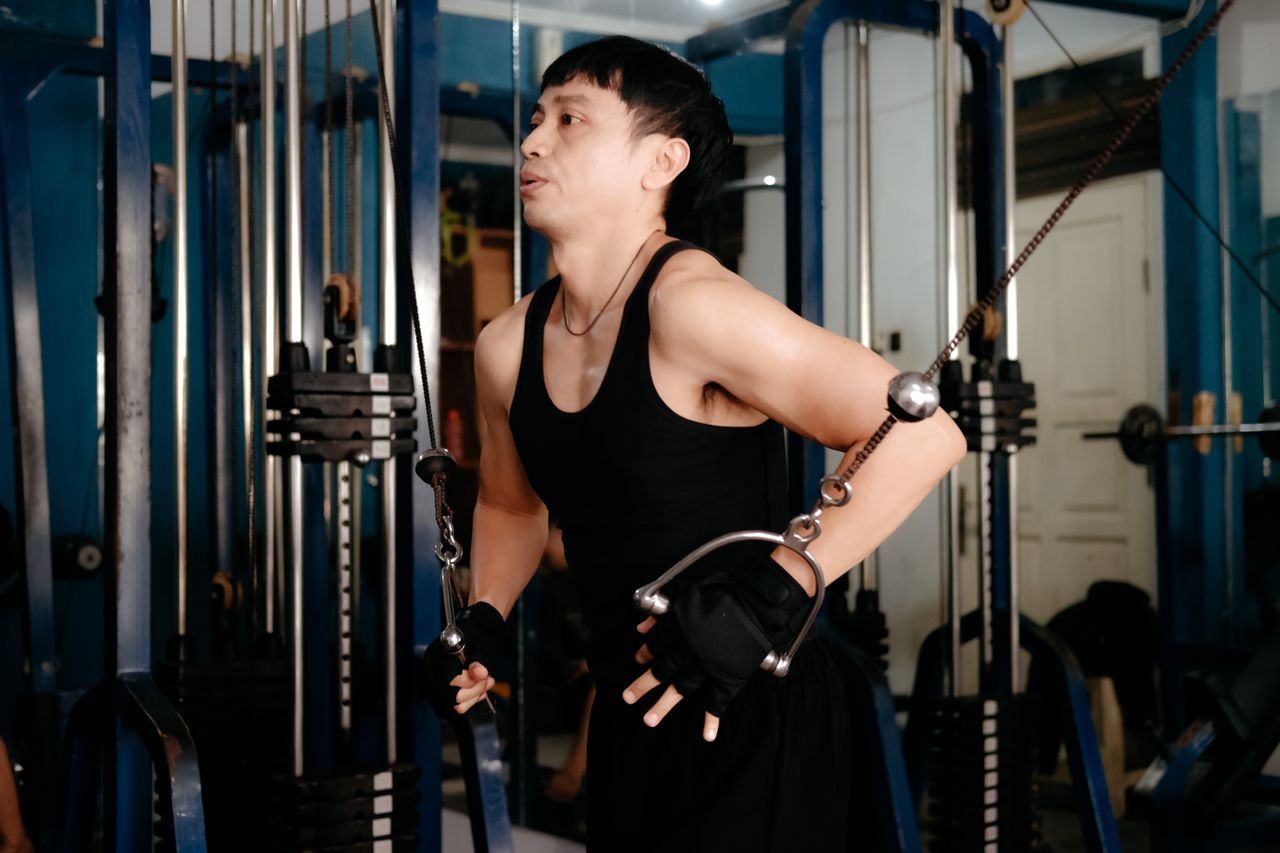
The low-to-high reverse cable fly works the back of the shoulders and upper back through a wider outward and upward pull. It may belong in the same programme, but it does not show whether the small external-rotation movement is improving. If the fly feels comfortable and the dumbbell turn does not, keep the rotation at an easier arm angle or load rather than using the fly as a substitute. P4O’s upper-body pulling and pressing guide covers the wider training balance. The priority here is learning and progressing the turning movement; the cable fly is an optional addition when it suits the rest of the week.
Decide how much belongs in one session
If both exercises are new, learn them with light loads and modest sets before making either hard. The rotation drill may fit early in a session when you can still pay attention to the elbow position. The cable fly may fit after larger pulling or pressing exercises if the shoulder remains comfortable. Another person may prefer the reverse order. There is no universal sequence; the more important task should happen while you can perform it accurately.
Progress can be subtle. In the rotation drill you may keep the elbow steadier or control a slightly longer arc before adding weight. In the fly you may maintain the intended path for every repetition rather than losing it as fatigue builds. Once those are repeatable, a small load change may be reasonable. If a heavier weight makes you twist, shrug or rush, return to the earlier version. The exercise is not improved by a number that changes its purpose.
Shoulder discomfort can also shift with total training load and the demands of work. Look for a pattern across sessions. Is ordinary reaching comfortable? Does the rotation exercise cause sharp pain or an ache that keeps worsening? These observations help guide the next change more than chasing a perfect posture in the mirror.
Stop the movement if it causes sharp pain, tingling, a feeling that the shoulder will give way or a sudden loss of range. Pain after a fall, visible deformity, marked weakness or a hot, swollen shoulder needs medical assessment rather than a heavier strengthening routine. For less urgent but persistent discomfort, an individual review can look at the shoulder and the rest of your training to decide which movement is worth keeping.
At Principle Four Osteopathy, we can use movement assessment and exercise rehabilitation to help choose a suitable shoulder progression. That might mean changing the arm angle, reducing the cable range or using another exercise while symptoms settle. If you are unsure how to rebuild upper-body work after shoulder pain, book online to see our Collins Street team.