Mountain climbers are often done as fast conditioning work. Slow one down and it becomes a more revealing exercise: one leg moves while the hands, shoulders and trunk support the body. Place a foam roller under the hands and the support becomes less predictable again. The wall plank sits at a very different level of effort, but it lets you practise supporting weight through the arms while the hips stay organised. These exercises make most sense when the goal is control, rather than simply trying to make a plank feel harder.
For someone who has spent the day at a desk, a wall can be a convenient place to explore how the shoulders take load. For a person training regularly, the same position can be a warm-up or a way to revisit technique after a sore shoulder. The roller version belongs later, when a floor plank and a controlled leg movement are already comfortable. There is no prize for adding an unstable surface before you can tell what the ordinary exercise is asking you to do.
Build a reliable hand support
The wall plank is a low-load way to check whether pressure through the palms and shoulders feels comfortable. You can practise its alternating hand lifts if changing support is the challenge; the linked wall guide shows that exercise in detail. Here the question is different: can the arms keep providing steady support while a leg moves? A secure raised surface or a stable floor plank can bring that question closer to the roller version. Choose the height where you can still breathe and leave the position easily. If the wrist or shoulder is painful at the wall, adding a roller is unlikely to help.
Move a leg without throwing the trunk
On the floor, begin in a high plank with the hands on a firm surface and the feet far enough apart to feel stable. Bring one knee forward slowly, then return the foot before moving the other leg. This is a mountain climber performed for control, not speed. Keep enough pressure through the hands that the shoulders do not collapse towards the floor. The trunk will make small adjustments, but the hips should not swing widely with every knee drive.
The return is part of the work. Some people draw the knee forward carefully, then throw the leg back and let the lower back drop. Others bring the knee so far in that the shoulders move well behind the hands and the body loses the original support. Shorten the knee travel until you can move in both directions at a pace you choose. A small, repeatable motion gives you more information than a larger one you cannot reverse smoothly.
If an ordinary high plank is uncomfortable, do not add the roller. You could practise at a wall or at a secure raised surface, or use a different task that loads the arms in a tolerable way. If the wrists, shoulders or back remain sore after a modest effort, the exercise deserves adjustment or assessment. Being able to walk, lift and train afterwards matters more than completing a particular variation during one session.
Once the floor version feels controlled, the foam roller can go beneath the hands. It changes the contact with the ground and can roll as the body shifts. Move one leg at a time as before, but begin with a shorter knee drive and fewer repetitions. Keep the roller in a position that feels secure and make sure you can step out safely if it moves unexpectedly. The point is to manage the added instability, not to turn the movement into a race against the roller.
Before moving a knee, notice which way the roller is free to travel and how your palms sit on it. A roller that slides away as soon as you lean in is the wrong setup for this session. Find a clear, nonslip space and test a brief two-footed hold first. Keep the movement small enough that the roller stays beneath the hands rather than chasing it across the room. A nearby wall or other obstruction should not be relied on to catch a runaway roller; it is better to adjust the exercise than to improvise a stop.
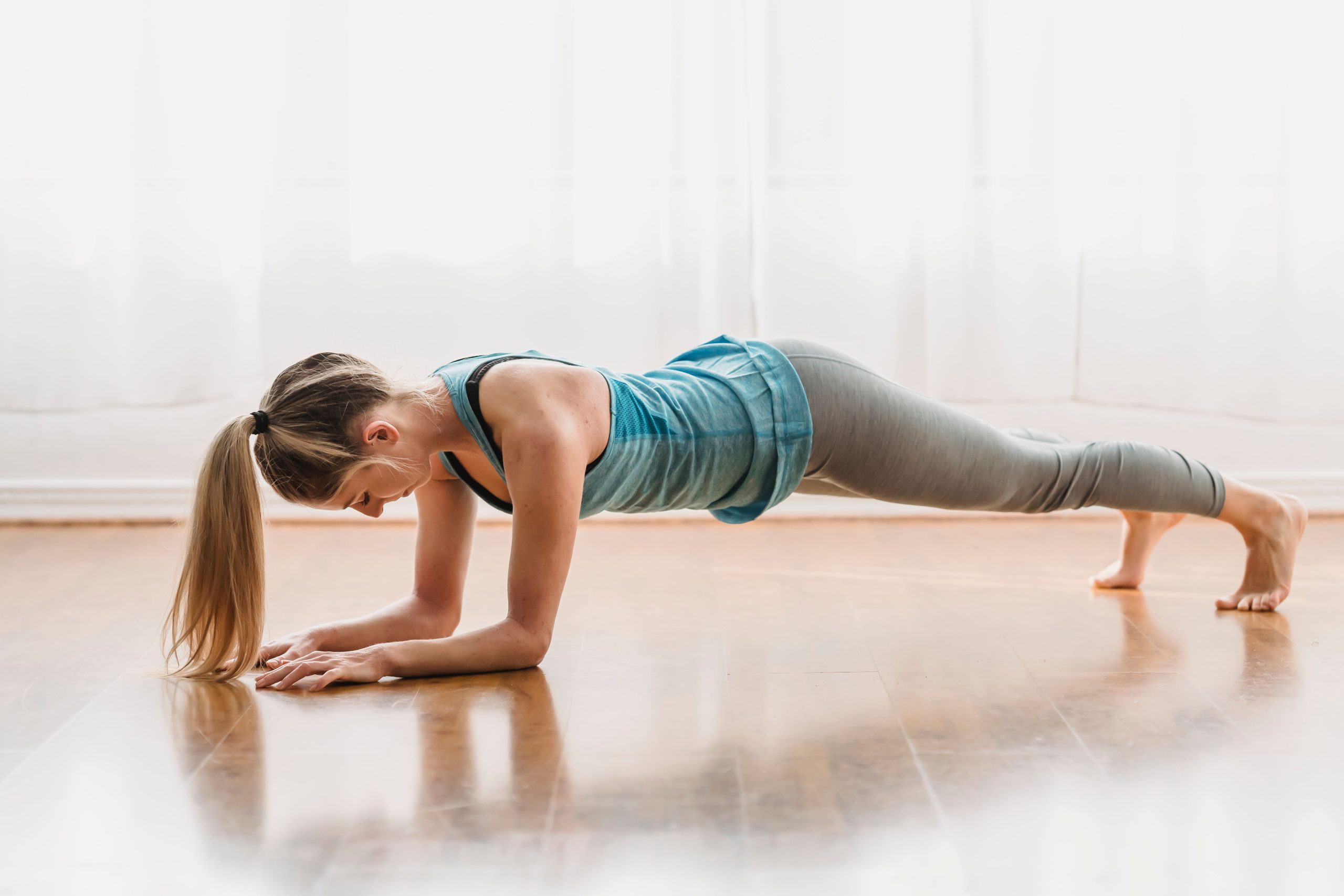
When the first knee comes forward, the other foot and both hands become the main supports. As the knee returns, check whether pressure through the palms becomes even again before changing legs. This small reset makes the sequence easier to judge. If you move the second knee immediately, the body may never return to a position you control. A slower rhythm can reveal whether the roller moves because of the leg travel or because the shoulders are shifting ahead of the hands.
The roller is unstable in a particular way: it can turn under the palms as weight changes. A wobble in a fixed plank is different from the roller actually travelling. If it begins to travel faster than you can correct without a jerk, step out safely and stop the set. Reducing knee range or returning to the stable floor version is a meaningful adjustment. The exercise should challenge shoulder support and trunk control, not test how quickly you can recover from losing the equipment.
Decide whether the roller earns its place
An unstable surface can reveal how quickly the shoulders and trunk respond to small changes in weight. It can also distract from the intended leg movement. If all your attention goes into gripping the roller and stopping it from escaping, you may get less useful practice than with your hands on a stable floor. The roller is one possible training tool, not a badge of progress. Use it when it makes the exercise relevant and controllable for you.
Look at the quality of the first few repetitions. Does the roller stay under the hands without a frantic correction? Can one knee move while the other leg supports you? Does the breathing continue? If the answer changes after several repetitions, stop before the position deteriorates. A short set you can repeat next week is more useful than one long set that ends with the shoulders trembling and the lower back sagging.
The shoulder load also needs to fit the rest of the week. A person who already presses, climbs or plays a hand-supported sport may have enough upper-limb work. A person returning from a break may need more time with the wall and floor before making the support unstable. Exercise selection is not simply a matter of finding the hardest variation in a video. It is about what the movement adds to a programme and whether the body recovers from it.
If you want a cardio session, a fast mountain climber on stable ground may serve that purpose better than a slow roller drill. If you want to practise shoulder support under a moving leg, slow the pace and choose the support that lets you do that well. Those are different training aims. Trying to maximise speed, knee range and instability in the same set often makes it hard to tell which one you are actually improving.
Let the response after exercise count
Working muscles can feel tired. Sharp wrist or shoulder pain, pins and needles, a back pain flare or a sense that the arm will give way is a reason to stop and change the task. New pain after a fall, visible shoulder deformity or sudden loss of movement needs medical care. For persistent but less urgent symptoms, a clinician can check whether the problem is related to the position, the load or something else that a generic plank progression cannot explain.
At our Melbourne CBD clinic, Principle Four Osteopathy can help connect movement assessment with exercise rehabilitation. We might change the support, the leg movement, the number of repetitions or the exercise altogether. If your shoulder or back keeps objecting when you add movement to a plank, book an appointment and we can work out a more suitable starting point.