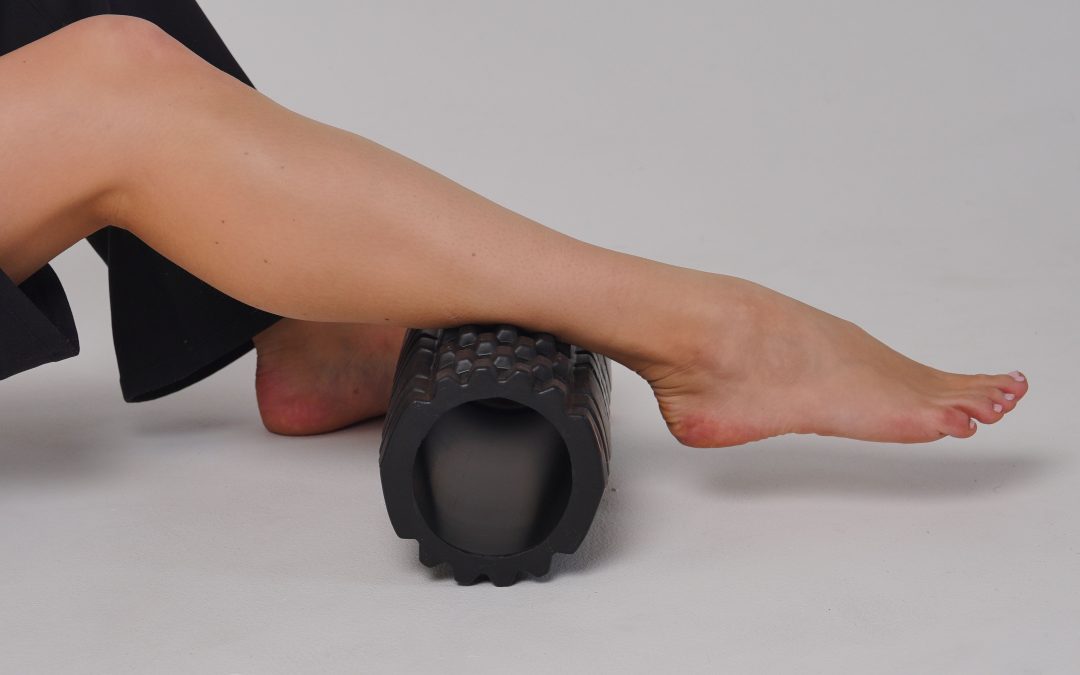
Calves do a lot of work in an ordinary Melbourne day. They help you walk between appointments, take the stairs and spend time on your feet, then may be asked to handle a run or gym session after work. When they feel tight, stretching is an understandable first response. Yet a calf that feels stiff, a calf that tires quickly and a calf recovering from an injury do not all need the same solution. Stretching explores movement; calf raises build the ability to produce and tolerate force. A useful plan may include both, but each has a different purpose.
The two exercises fit together well for that reason. One shows how a calf stretch can involve gentle side-to-side hip movement instead of always moving straight forward. The other shows straight- and bent-knee calf raises, including a loaded version. Understanding what changes between them makes it easier to choose a useful starting point and to recognise when a painful calf needs more than a routine you found online.
Understand what you are asking of the calf
The calf is often spoken about as if it were one muscle. Two of its main muscles are the gastrocnemius, which crosses the knee as well as the ankle, and the soleus, which sits deeper and does not cross the knee in the same way. They contribute to rising onto the toes and moving the body forward when you walk or run. This is why a change in knee position affects how a calf raise feels. It is also why a lower leg may cope with one activity but complain during another.
Tightness is a sensation, not a diagnosis. Sometimes it appears after a demanding session, a long period on your feet or a change in training. Sometimes the calf is painful, weak or swollen instead, and that calls for a different response. Before deciding to stretch harder, notice when the sensation appears, whether one side is different, and whether it changes with walking, stairs or a rise onto the toes. That information is more useful than assuming every calf problem is a flexibility problem.
Mobility and strength can be trained without treating them as opposing camps. A comfortable stretch may help you explore ankle movement. Repeated calf raises ask the muscles and tendons to accept load. Neither makes the other unnecessary, but neither guarantees a result on its own. For a runner, the issue might involve how training volume has changed. For someone who has started a standing job, the amount of time on their feet may matter. The exercise needs to fit the demand.
Try a calf stretch that moves with you
Many people know the wall stretch: place the foot behind you and move the body forward while the heel stays down. Try adding a gentle shift of the hips from side to side. Rather than searching only for a straight-ahead stretch, you change the angle at which the calf is loaded. The motion should be small and controlled enough that you can keep the foot settled and notice what changes. Turning it into a fast sway or forcing the foot into an extreme position misses the point.
Find a position in which you feel supported and the stretch is comfortable. Move slowly forwards if that helps you find the calf, then let the hips travel a little to each side. You may feel the pull move across the back or sides of the lower leg. It is not necessary to feel a stronger stretch at every angle. If one direction produces a sharp or pinching sensation, reduce the range or leave that variation out. A useful stretch should be something you can enter and leave without bracing against pain.
Around 30 to 60 seconds is one possible stretch duration, rather than a prescription. Someone with an irritable calf may prefer less time, while another person may simply use a few slow shifts before activity. Foot angle can also be changed, but there is little value in adding every possible variation at once. Keep the setup simple enough to tell which movement feels useful and which one does not.
Stretching can form part of a warm-up, a break from prolonged standing or a wider rehabilitation plan. It should not be used to prove that you can tolerate pain. If a recent strain has left the calf tender, or the stretch leaves it more sore afterwards, a clinician can help you decide whether to pause it, modify it or focus on another task first. More force is rarely the most informative next step.
Raise the heel with two different knee positions
A calf raise looks straightforward: rise onto the ball of the foot, then lower with control. Small details determine what the exercise asks of you. A relatively straight knee places more emphasis on the gastrocnemius. Keeping the knee bent shifts more emphasis towards the soleus. Both muscles still contribute; the knee angle changes the emphasis rather than switching one muscle completely off. Including both versions can make sense when the goal is to train the lower leg for varied daily and sporting demands.
Begin with a stable surface or support if balance is the limiting factor. Rise through a range that you can control, without bouncing at the bottom or rolling heavily onto one edge of the foot. Lower deliberately rather than simply dropping the heel. The height of the raise matters less than whether you can reproduce it without compensating. A small, even movement is a better starting point than a high rise that relies on momentum or a grip on the support to pull you up.
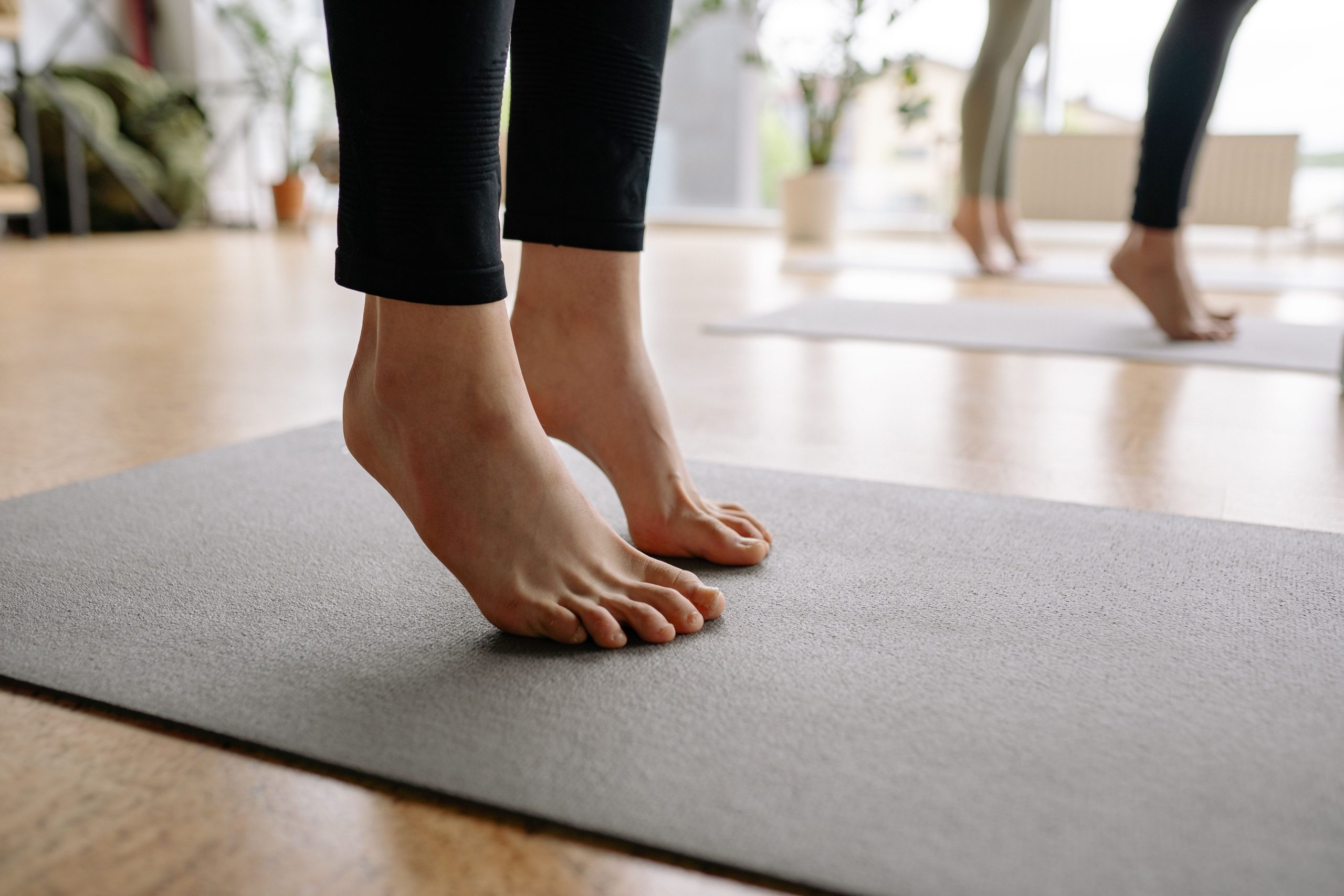
For the bent-knee version, keep the knee softly flexed as you rise and lower. If it straightens during every repetition, you have lost the distinction you were trying to practise. The movement may feel different or fatigue sooner than the straight-knee raise, and that is not automatically a problem. The point is to give the calf a slightly different job, not to force both variations to use the same weight or produce the same number of repetitions.
Once the unweighted movement is steady, a kettlebell held on the same side as the working leg can add load. Weight is a progression, not proof that an exercise is being done properly. You can also change the difficulty by moving from two legs to one, altering the available range or adding repetitions. Change one variable at a time so you can understand how the calf responds. A sudden jump in load on top of a new running or walking volume can be more than the lower leg is ready to handle.
Build a plan the lower leg can tolerate
There is no universal sequence in which everyone must stretch, then perform a set number of straight-knee raises, then repeat them bent-knee. A person training for a run may need to consider recent mileage and hill work. Someone recovering from a strain may begin with a more supported and less demanding task. Someone with a desk job who is newly walking more may simply need to build consistency. The exercise choice, load and frequency should be set against the rest of the week, not judged in isolation.
Pay attention to the response after the session as well as during it. Can you walk normally later? Is the calf noticeably more painful the next morning? Are you beginning to avoid the stairs because of it? Those observations help determine whether the current level is reasonable. Mild exercise effort is different from a sharp pain that changes how you move. If the calf repeatedly flares after a particular variation, reducing load or range may be more sensible than trying to stretch it harder between sets.
A stretch can help you explore movement and calf raises can build capacity, but neither explains every cause of pain. A sudden painful strain, marked weakness or difficulty walking needs assessment before you return to hard training. A calf that is unexpectedly red, hot or swollen should be assessed promptly rather than treated as ordinary tightness. If symptoms are persistent or keep returning, our Melbourne CBD team can look at your movement and activity demands, then help you choose a progression that fits. You can book an appointment online at our Collins Street clinic.