
After a long stretch at a desk, many people want one exercise that will make their back feel less stiff. Someone returning to lifting or sport may have a different question: how do I keep control when my arms and legs move? The cat camel and the foam roller prone superman speak to these two needs. The cat camel is a slow way to explore spinal movement. The prone superman adds an active lift, and the foam roller makes the support less steady. Both can be useful, but they are not interchangeable and there is no reason to rush from one to the other.
For people working around Melbourne CBD, the starting point may be a day of meetings, commuting and limited movement. For others it may be a training session that feels awkward after time away. Neither situation tells us, by itself, why a back hurts. These exercises are best understood as ways to practise movement and control, rather than tests that diagnose a problem or promise relief. The right choice depends on the movement you can do comfortably and the task you are trying to return to.
Begin with the cat camel
Start on your hands and knees with enough space to move without reaching for the end of your range. Slowly round your back, then reverse the movement into a gentle arch. Let the movement travel through your spine as a whole. Try not to create the appearance of a large movement simply by sitting your hips back towards your heels or dropping your stomach without control. The exercise asks you to notice the difference between movement at the hips and movement through the back.
Breathing normally is part of the exercise. People often hold their breath when they concentrate on a new movement, or hurry from one shape to the next. Instead, move at a pace that lets you feel each change of direction. There is no ideal number of seconds for a repetition and no need to force a perfectly rounded or arched position. If the final part of the range feels uncomfortable, stay within the part you can control. A smaller movement performed calmly can tell you more than a large one that you have to push into.
The cat camel can be used as a brief movement break or as part of a warm-up. That does not mean everyone with back pain needs it. Some people prefer walking or a change of position; others find hands-and-knees work awkward on the wrists or knees. Padding under the knees or a different supported position may make it easier, but a painful exercise is not something to persevere with simply because it is commonly recommended. If the movement repeatedly increases your symptoms, stop and seek advice about a better option.
It also helps to know what the cat camel is not trying to do. It is not a heavy strengthening exercise and it does not require you to hold the spine rigid. Its value lies in practising gentle flexion and extension while paying attention to where the movement comes from. If you have spent hours in one position, the change itself may feel welcome. That is different from claiming that the exercise corrects a posture, realigns the spine or solves the cause of pain.
When the foam roller changes the task
The foam roller prone superman asks for more active work. The roller allows the arms and legs to begin farther in front of the body so they have more distance to lift against gravity. It also changes the base of support. The person doing the exercise has to balance while lifting, rather than simply concentrating on the lift. Those two changes explain why the roller is there: it adds range and a stability challenge.
Before attempting the roller version, make sure a simpler prone lifting movement is comfortable and controlled. The precise roller position and the way you are supported matter, especially if you are not familiar with the exercise. A short demonstration or a clinician checking your setup is more useful than guessing from a name. Once positioned, begin with a small lift rather than throwing the arms and legs upwards. The goal is to make the movement deliberate and keep your balance, not to see how high you can raise your hands or feet.
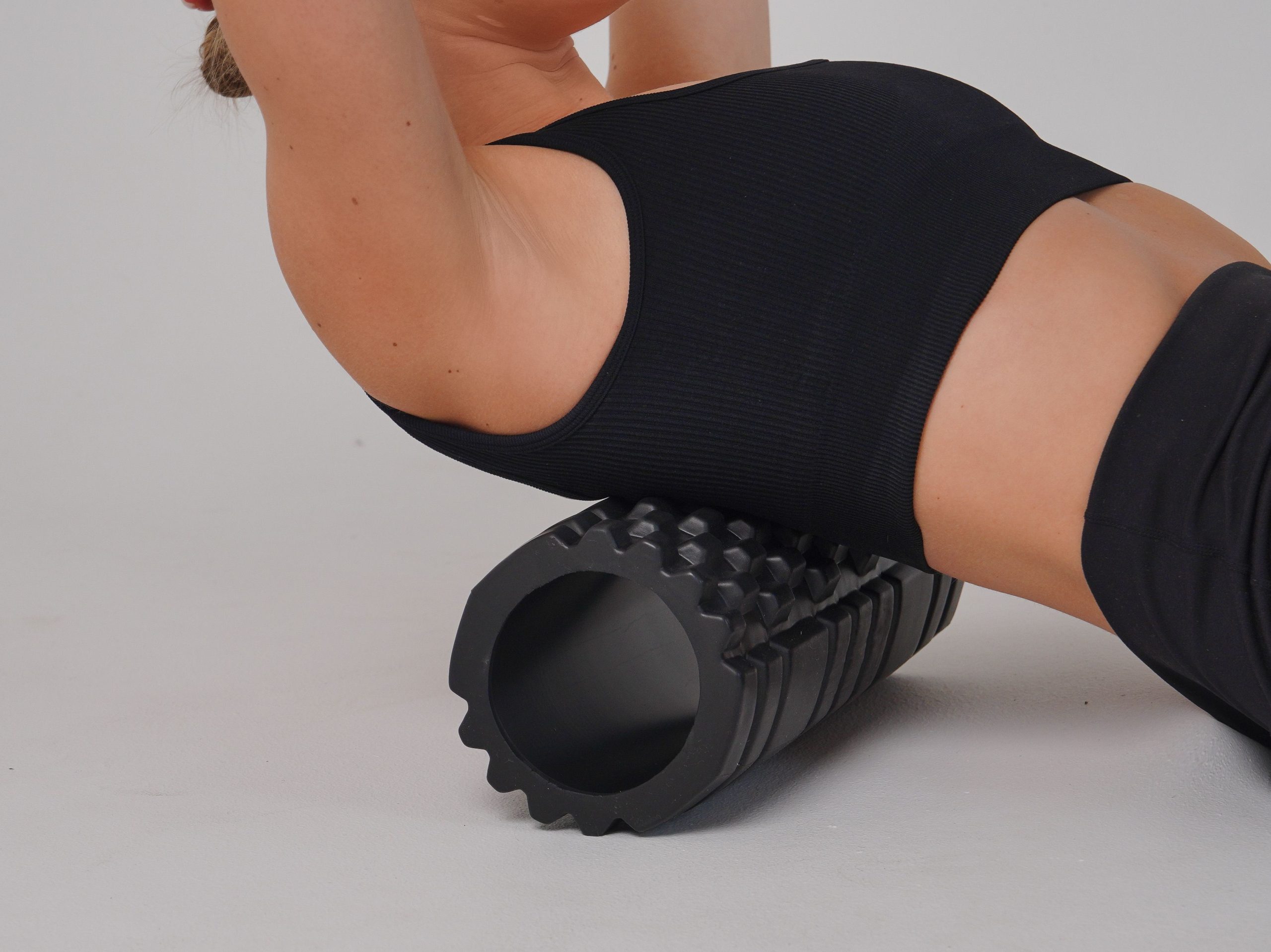
Watch what happens through the lower back as the limbs lift. If all of the movement seems to come from a hard arch in one spot, or you have to hold your breath to stay on the roller, the challenge may be too large. Reducing the range, changing the setup or returning to a stable surface can make the task more manageable. The roller is an optional progression, not an ingredient that automatically makes a back exercise better. Its usefulness depends on whether the added instability serves a purpose in your programme.
The two exercises also create different sensations. The cat camel moves the spine through a comfortable range with little resistance. The prone superman requires the muscles of the back and trunk to work while the limbs lift, and the roller adds a balance demand. Someone who likes the first exercise may not be ready for the second; someone who already trains comfortably may have little reason to spend much time on the first. Exercise choice should follow the person, rather than a fixed ladder from easy to hard.
Use movement as a guide, not a score
If you are trying both movements, give each a clear job. You might use a few slow cat camel movements to see how your back feels before a workout. A controlled prone lift could then be part of a separate strength session, if it suits you. You do not need to turn them into a long circuit or meet a target number of repetitions for the exercise to count. Notice the quality of the movement and whether your symptoms remain settled during and after it.
Progression can come from more than adding repetitions. With the cat camel, you may become better at moving without rushing, separating the hips from the back and breathing naturally. With the superman, you might first improve balance and control over a short range before considering a larger one. Adding the roller before you can manage the basic lift may simply make the exercise harder to interpret. If a change makes the movement jerky, there is no loss in returning to the previous version.
Back symptoms can change from day to day. A movement that felt straightforward last week might feel less comfortable after a poor night’s sleep or an unusually heavy session. That is a reason to adjust the challenge, not to assume you have failed at the exercise. Likewise, feeling stiff after a CBD workday does not mean you need to train your back as hard as possible that evening. Keeping your usual activities going where you can, and varying position and movement across the day, may be more useful than relying on one drill.
Know when to ask for a closer look
These general exercises are not a substitute for an assessment when back pain is new, worsening, recurring or limiting what you can do. The same applies if a movement produces sharp pain, symptoms spreading into the leg, or a response that does not settle as expected. A clinician can help work out whether the exercise is relevant, what level of challenge is suitable and whether another form of care is needed. Severe or concerning symptoms warrant prompt medical advice rather than an attempt to stretch or strengthen through them.
At our Collins Street clinic, we combine movement assessment with exercise rehabilitation where it is appropriate. That may mean making an exercise easier, changing its purpose or choosing something else entirely. The useful question is not whether everyone should do the cat camel or a foam roller superman. It is whether that movement helps you work towards a more comfortable day or a more confident return to training. If you are unsure how to progress, book an assessment and we can look at your situation in person.