Why Shoulder Pain Doesn’t Go Away — And What Actually Fixes It
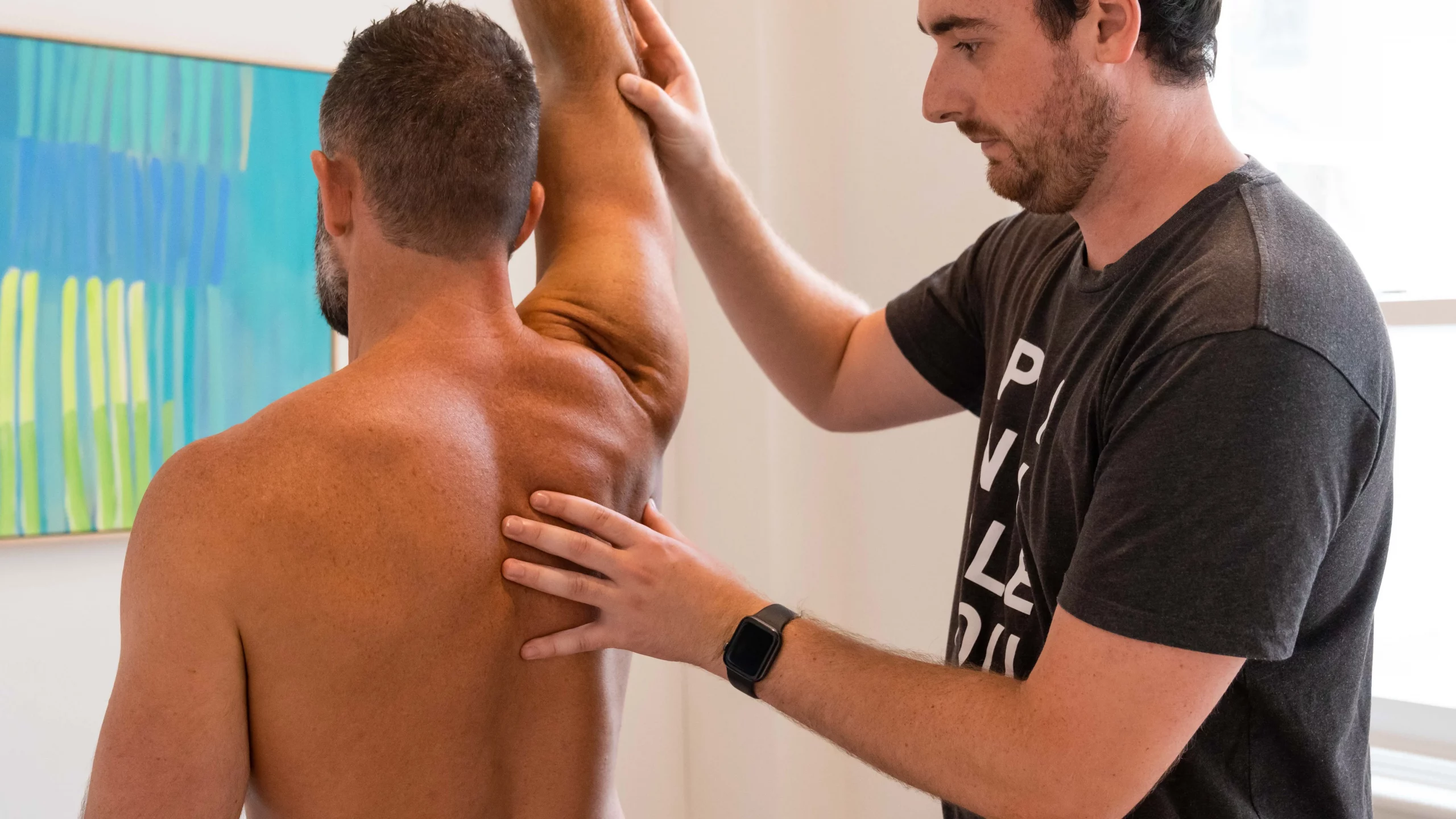
Shoulder pain is one of the most frustrating musculoskeletal problems people experience.
Unlike many injuries, it rarely starts with a dramatic event.
Instead, it develops gradually — a pinch reaching overhead, discomfort during sleep, weakness at the gym, or a sharp pain putting on a jacket.
The most confusing part?
It improves… then returns.
You rest it… then it flares again.
You stretch… but nothing changes long-term.
Many people begin to worry:
- “Have I torn something?”
- “Is my rotator cuff damaged?”
- “Should I stop using it?”
- “Why won’t this heal?”
The good news is that most shoulder pain is not dangerous and does not require surgery.
The challenge is that the shoulder depends heavily on movement confidence and load tolerance — and when those are lost, symptoms persist.
This guide explains why shoulder pain lingers and what actually helps recovery.
First — The Reassuring Truth About Shoulder Pain
Research consistently shows:
- Most shoulder pain improves without surgery
- Scans often show “tears” in people without pain
- Pain does not equal tissue damage
- Strength and gradual loading are key to recovery
In other words:
The shoulder usually doesn’t fail because something broke —
it struggles because capacity no longer matches demand.
👉 Learn more about common problems we manage: Conditions We Treat
Understanding the Shoulder: Why It’s Vulnerable
The shoulder is designed for mobility, not stability.
Unlike the hip joint (deep and secure), the shoulder sits shallowly on the rib cage.
This allows huge freedom of movement — but requires muscles to control it constantly.
Your rotator cuff muscles act like dynamic stabilisers.
They don’t just move the arm.
They guide the joint while you move.
So shoulder pain rarely comes from a single structure — it comes from a coordination and load tolerance problem.
The Most Common Types of Shoulder Pain
Rotator Cuff Related Pain
The most common presentation.
Symptoms:
- Pain lifting arm sideways
- Weakness overhead
- Night discomfort
- Pain reaching behind
Despite the name, this rarely means a serious tear.
Subacromial Pain (“Impingement”)
Often described as pinching.
Modern understanding:
Not a structure being trapped — but a sensitive tendon reacting to load.
Frozen Shoulder
Marked stiffness and pain.
Typically:
- Gradual onset
- Hard to lift arm
- Long recovery (months)
Movement remains important — not avoidance.
Gym and Training Shoulder Pain
Common in pressing, pulling and overhead movements.
Usually due to:
- Rapid load increase
- Technique changes
- Fatigue accumulation
👉 Exercise Rehabilitation & Strength Programs
Why Shoulder Pain Keeps Coming Back
Most recurring shoulder pain follows a predictable cycle:
Pain → Rest → Improvement → Return to activity → Pain again
This happens because rest reduces symptoms but also reduces capacity.
When normal activity resumes, the shoulder isn’t ready yet.
Recovery requires rebuilding tolerance — not just calming pain.
What Scans Actually Mean
Many MRI findings are normal age-related changes:
- Rotator cuff tears
- Bursitis
- Degeneration
Studies show these commonly exist without pain.
Treat the person — not the scan.
Imaging is usually only required when:
- Significant trauma occurred
- Major weakness is present
- Surgery is considered
Recovery Phases
Understanding the stage of recovery prevents frustration.
Early Stage: Calm the Shoulder
Features
- Sharp movement pain
- Night discomfort
- Fear of lifting
Goals
Reduce irritation while maintaining movement.
Helpful strategies
- Gentle arm movement
- Avoid complete rest
- Sleep positioning support
- Modify aggravating tasks
Clinical approach
Education and symptom modulation
👉 Book an Osteopathy Consultation
Mid Stage: Restore Movement
Features
- Pain during certain ranges
- Weakness feeling
- Catching sensations
Goals
Restore confidence and range.
Helpful strategies
- Gradual lifting exposure
- Light resistance work
- Functional movement practice
Clinical approach
Progressive loading plan
Late Stage: Build Capacity
Features
- Pain only during heavy activity
- Training limitations
Goals
Prevent recurrence.
Helpful strategies
- Strength training
- Load management
- Gradual return to sport/gym
👉 Strength & Conditioning Rehabilitation
The Biggest Myth: “Don’t Use It”
Avoidance prolongs shoulder pain.
Tendons adapt to load.
Without load, they weaken.
Appropriate movement is therapeutic.
Self-Help Strategies That Actually Work
1. Frequent Gentle Movement
Move the shoulder regularly during the day.
Small motion reduces sensitivity.
2. Progressive Strength
Start light:
- Isometric holds
- Light band work
- Gradual overhead tasks
Consistency matters more than intensity.
3. Modify, Don’t Stop Activity
Instead of avoiding exercise:
Change range
Change load
Change tempo
4. Sleep Adjustments
Support arm with pillow in front of body.
Reduces night pain significantly.
5. Workplace Considerations
Desk posture rarely causes shoulder damage, but prolonged static loading aggravates symptoms.
👉 Ergonomic Assessment Melbourne CBD
Why Stretching Alone Rarely Fixes It
Stretching reduces tension temporarily but does not increase load tolerance.
Strength restores function.
The goal is resilience, not flexibility.
When We Refer
If required, we coordinate care with:
- GP (imaging or medication review)
- Sports physician
- Orthopaedic surgeon (rare cases)
- Physiotherapist post-operative rehab
Most shoulder pain does not require surgery.
What Treatment Actually Looks Like
Management focuses on:
- Understanding triggers
- Reducing sensitivity
- Gradually reloading tissue
- Preventing recurrence
Hands-on treatment may help comfort
Exercise restores capacity
When To Seek Help
Consider assessment if:
- Pain lasts >2–3 weeks
- Night pain persists
- You avoid lifting tasks
- Gym or sport limited
- Symptoms repeatedly return
The Long-Term Outlook
Shoulder pain recovery is not linear.
Flare-ups occur — and are normal.
Progress is measured by increasing tolerance, not zero pain immediately.
Final Takeaway
Shoulder pain persists when capacity stays below demand.
The solution isn’t rest, posture correction, or passive treatment alone.
It’s rebuilding confidence and strength gradually.
With the right approach, most shoulders recover fully.