What to Expect at Your First Shockwave Therapy Consultation
If you’re booked in for your first Shockwave Therapy consultation at Principle Four Osteopathy, this guide explains exactly what the appointment involves, how shockwave therapy is used, and whether it’s the right option for your condition.
Shockwave therapy is often recommended for persistent tendon, muscle or soft-tissue pain that has not fully responded to exercise, manual therapy or rest alone.
What Is Shockwave Therapy?
Shockwave therapy (also known as extracorporeal shockwave therapy) uses high-energy acoustic waves delivered through the skin to stimulate healing in targeted tissues.
At Principle Four Osteopathy, shockwave therapy is commonly used to help manage:
-
Persistent tendon pain (tendinopathy)
-
Plantar heel pain
-
Achilles or patellar tendon issues
-
Shoulder tendon pain
-
Muscle or soft-tissue pain that has become longstanding
Shockwave therapy aims to stimulate circulation, influence pain pathways, and support tissue recovery — particularly in areas that have struggled to heal over time.
👉 Shockwave Therapy Melbourne CBD
How Is Shockwave Therapy Different From Other Treatments?
Shockwave therapy is not a massage or hands-on technique, and it is not designed to replace exercise or rehabilitation.
Instead, it is often used to:
-
Stimulate stubborn or slow-healing tissue
-
Reduce sensitivity in painful areas
-
Improve tolerance to loading and rehab exercises
-
Support progress when recovery has plateaued
At Principle Four Osteopathy, shockwave therapy is typically combined with exercise rehabilitation, load management and education for best results.
Before Your Appointment: How to Prepare
To prepare for your shockwave therapy consultation:
-
Wear clothing that allows easy access to the affected area
-
Bring any relevant imaging, reports or previous treatment history
-
Be ready to discuss:
-
How long your symptoms have been present
-
What activities aggravate or ease your pain
-
Previous treatments you’ve tried
-
Your goals for recovery
-
No special preparation is required, and you can usually continue normal activity before your appointment.
What Happens During Your First Shockwave Therapy Consultation?
1. Assessment & Clinical Review
Your appointment begins with a detailed assessment to confirm whether shockwave therapy is appropriate for your condition. Your osteopath will review:
-
Your symptom history and duration
-
Previous injuries or flare-ups
-
Current activity or training levels
-
Response to previous treatments
Shockwave therapy is not suitable for every condition, so this step ensures it is used appropriately.
2. Targeted Physical Examination
Your osteopath will examine the affected area to identify:
-
Localised tenderness or pain points
-
Tissue involvement (e.g. tendon, fascia, muscle)
-
Movement patterns contributing to ongoing overload
-
Adjacent areas that may be influencing symptoms
This helps guide accurate application of shockwave treatment.
3. Shockwave Therapy Application
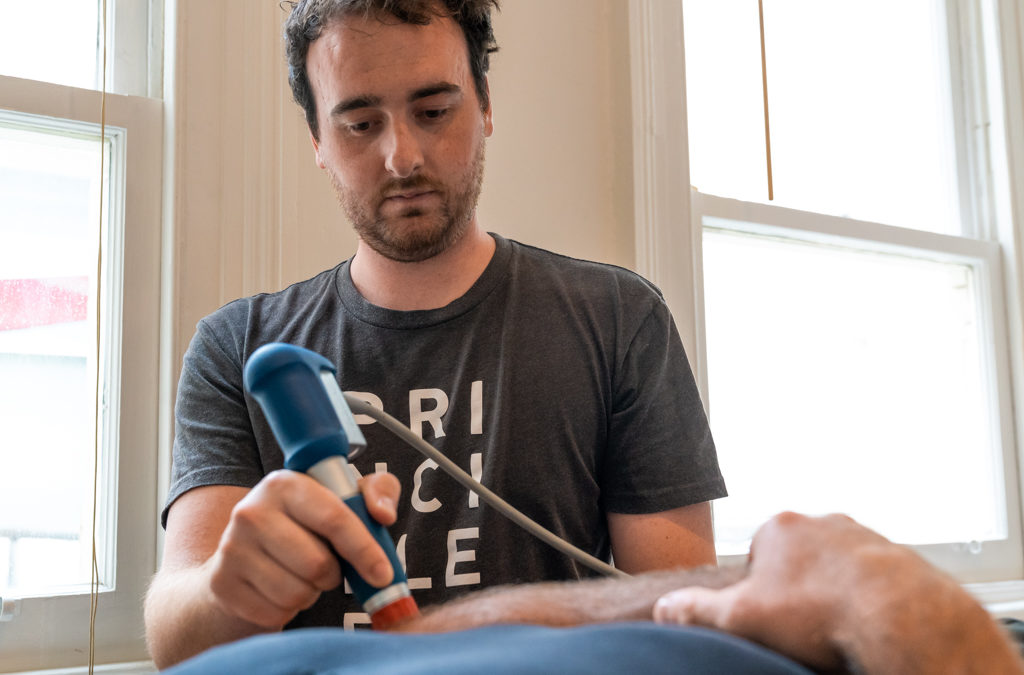
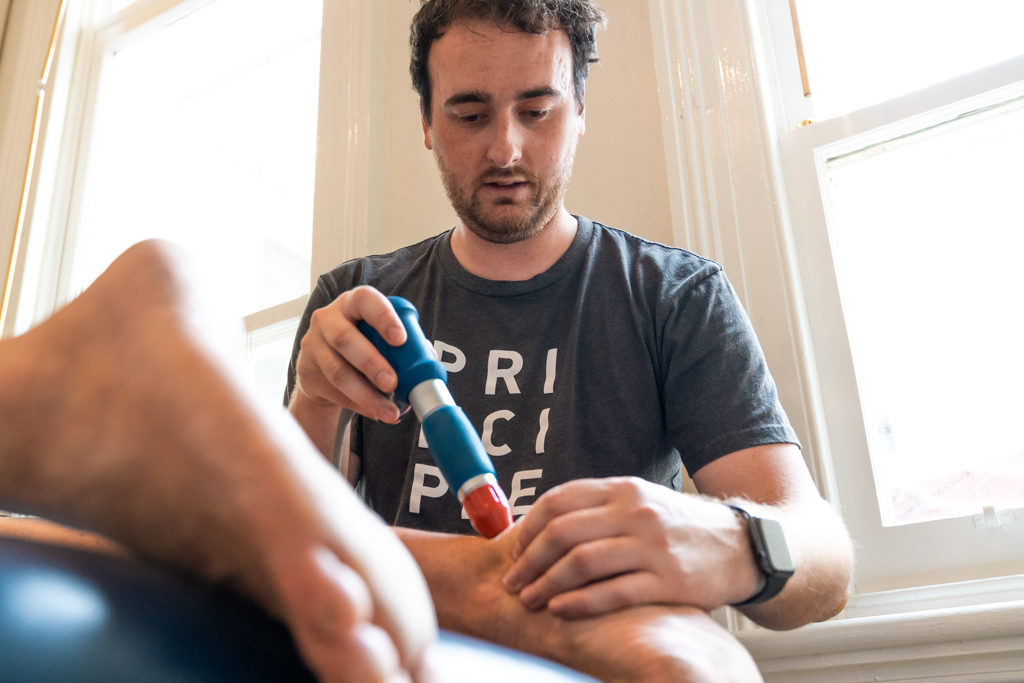
If shockwave therapy is indicated, the treatment involves:
-
A handheld device applied directly to the skin
-
Short pulses of acoustic energy delivered to the target area
-
Treatment lasting only a few minutes
You may feel discomfort during treatment, particularly over sensitive areas, but intensity is adjusted to your tolerance.
4. Post-Treatment Advice & Expectations
After treatment, your osteopath will explain:
-
What to expect over the next 24–72 hours
-
Normal post-treatment responses (e.g. soreness)
-
Activity or exercise modifications, if needed
-
How shockwave fits into your overall recovery plan
Most people can resume normal daily activities shortly after treatment.
5. Ongoing Management Plan
Shockwave therapy is rarely a one-off treatment. Your osteopath will discuss:
-
Recommended number of sessions
-
Spacing between treatments
-
How shockwave integrates with exercise rehabilitation
-
When progress should be reassessed
👉 Strength & Conditioning
Who Is Shockwave Therapy Best Suited For?
Shockwave therapy is commonly recommended for people who:
-
Have had symptoms for several months or longer
-
Have tried exercise or manual therapy with limited improvement
-
Experience tendon or soft-tissue pain during loading
-
Want a targeted option to support rehab progress
It is less commonly used for acute injuries or early-stage pain.
Can Shockwave Therapy Be Combined With Osteopathy?
Yes. Shockwave therapy is often used alongside:
-
Hands-on osteopathy treatment
-
Exercise rehabilitation
-
Strength and conditioning programs
This combined approach helps address both local tissue sensitivity and underlying movement or load factors.
👉 Osteopathy Services Melbourne CBD
Frequently Asked Questions (FAQs)
Does shockwave therapy hurt?
Some discomfort is common during treatment, especially over sensitive areas, but intensity is adjusted to remain tolerable.
How many shockwave sessions will I need?
Most conditions require a short series of sessions, typically spaced one week apart. Your osteopath will tailor this to your presentation.
Will I feel better immediately?
Some people notice early changes, while others improve gradually over several weeks as tissue response develops.
Can I exercise after shockwave therapy?
In most cases, yes — though your osteopath may temporarily modify load or intensity depending on the condition being treated.
Is shockwave therapy safe?
When used appropriately and screened correctly, shockwave therapy is considered safe and well tolerated.
Is shockwave therapy a standalone solution?
No. Shockwave therapy works best when combined with appropriate exercise, education and load management.
Summary
Your first Shockwave Therapy consultation at Principle Four Osteopathy is designed to determine whether shockwave is the right tool for your condition, and how it fits into a broader recovery plan.
When used appropriately, shockwave therapy can help stimulate healing, reduce sensitivity and support progress — particularly for persistent tendon and soft-tissue pain.
Ready to Book?
If you’d like to book a Shockwave Therapy consultation or want to know if it’s suitable for your condition: