Sports Injuries Explained: From Acute Injuries to Return-to-Sport Rehabilitation
Sports and physical activity provide enormous health benefits, but injuries are an unfortunate reality for many active people — from recreational gym-goers to competitive athletes.
At Principle Four Osteopathy, we regularly help people manage acute sporting injuries, overuse injuries and longer-term pain conditions, and guide them safely back to training and sport.
This article provides a clear, evidence-based overview of:
-
The most common types of sports injuries
-
How and why they occur
-
What recovery actually requires
-
How osteopaths can assist
-
What effective return-to-sport rehabilitation looks like
Understanding Sports Injuries: Not All Injuries Are the Same
Sports injuries are often grouped together, but they differ significantly in mechanism, recovery needs and management strategies.
Broadly, they fall into four overlapping categories:
-
Acute sporting injuries
-
Overuse injuries
-
Tendinopathies
-
Muscle strains and joint sprains
Understanding the type of injury helps guide appropriate treatment, rehabilitation and return-to-sport decisions.
Acute Sporting Injuries
What Are Acute Sporting Injuries?
Acute injuries occur suddenly, often as a result of a clear event such as:
-
A fall
-
A collision
-
A sudden change of direction
-
A jump or landing
-
A rapid acceleration or deceleration
Common examples include:
-
Ankle sprains
-
Knee ligament injuries
-
Muscle tears
-
Shoulder dislocations
-
Acute lower back injuries
How Acute Injuries Should Be Managed
Modern evidence has moved away from prolonged rest and immobilisation for most acute injuries.
Current best practice focuses on:
-
Protecting the injured tissue early
-
Maintaining safe movement where possible
-
Gradually restoring load and function
Swelling, pain and stiffness are normal biological responses, not signs of damage worsening when appropriately managed.
Early assessment helps determine:
-
Injury severity
-
What movements are safe
-
Whether imaging or referral is required
-
How soon rehabilitation can begin
👉 Osteopathy Services Melbourne CBD
Overuse Injuries
What Are Overuse Injuries?
Overuse injuries develop gradually over time, often without a single identifiable incident.
They occur when repetitive load exceeds the body’s current capacity to recover.
Common overuse injuries include:
-
Shin pain
-
Stress reactions
-
Tendon pain
-
Runner’s knee
-
Shoulder pain in throwing or overhead sports
Why Overuse Injuries Develop
Overuse injuries are rarely caused by “poor biomechanics” alone. Research shows they are influenced by:
-
Rapid changes in training volume or intensity
-
Insufficient recovery
-
Reduced strength or tissue capacity
-
Previous injury history
-
External load factors (work, stress, sleep)
Importantly, overuse injuries are not a sign that sport is harmful, but that training demands have temporarily outpaced tissue adaptation.
Tendinopathies
What Is Tendinopathy?
Tendinopathy refers to persistent tendon pain and reduced load tolerance, rather than inflammation alone.
Common examples include:
-
Achilles tendinopathy
-
Patellar tendinopathy
-
Rotator cuff tendinopathy
-
Lateral elbow pain
Tendons adapt slowly and require progressive, appropriate loading to recover.
Evidence-Based Management of Tendon Pain
Current evidence strongly supports:
-
Gradual, progressive loading programs
-
Education around pain tolerance
-
Avoiding prolonged rest
Complete rest often leads to reduced tendon capacity and delayed recovery.
Tendon pain can be present without structural damage, and pain does not automatically mean harm.
Muscle Strains
What Are Muscle Strains?
Muscle strains occur when muscle fibres are overloaded beyond their current capacity, often during:
-
Sprinting
-
Jumping
-
Rapid directional changes
-
Fatigue
Common sites include:
-
Hamstrings
-
Calves
-
Quadriceps
-
Groin muscles
Muscle Strain Recovery
Recovery depends on:
-
Injury severity
-
Location
-
Training demands
-
Previous injury history
Early, controlled movement is usually beneficial. Progressive strengthening is essential to restore confidence, speed and power, and reduce re-injury risk.
Joint Sprains
What Are Joint Sprains?
Joint sprains involve injury to ligaments that stabilise joints.
Common examples include:
-
Ankle sprains
-
Knee ligament sprains
-
Wrist sprains
Sprains often cause:
-
Swelling
-
Pain with movement
-
Reduced joint control
Why Rehabilitation Matters After Sprains
Even after pain settles, strength, balance and control deficits can persist, increasing the risk of recurrence.
Rehabilitation focuses on:
-
Restoring joint mobility
-
Improving stability
-
Gradually reintroducing load and impact
How Osteopaths Help With Sports Injuries
At Principle Four Osteopathy, we use a whole-system approach to sports injury management.
Osteopathy Treatment
Osteopathy can assist by:
-
Improving joint and soft-tissue mobility
-
Reducing protective muscle tension
-
Supporting movement confidence
-
Addressing compensatory pain patterns
Hands-on treatment is used to support rehabilitation, not replace it.
Movement Assessment
Assessment helps identify:
-
Movement restrictions
-
Load intolerance
-
Strength and control deficits
-
Factors contributing to repeated injury
This ensures rehabilitation is targeted, not generic.

Exercise-Based Rehabilitation
Exercise rehabilitation addresses:
-
Tissue capacity
-
Movement efficiency
-
Strength and endurance
-
Sport-specific demands
Programs are progressive, adaptable and evidence-informed.
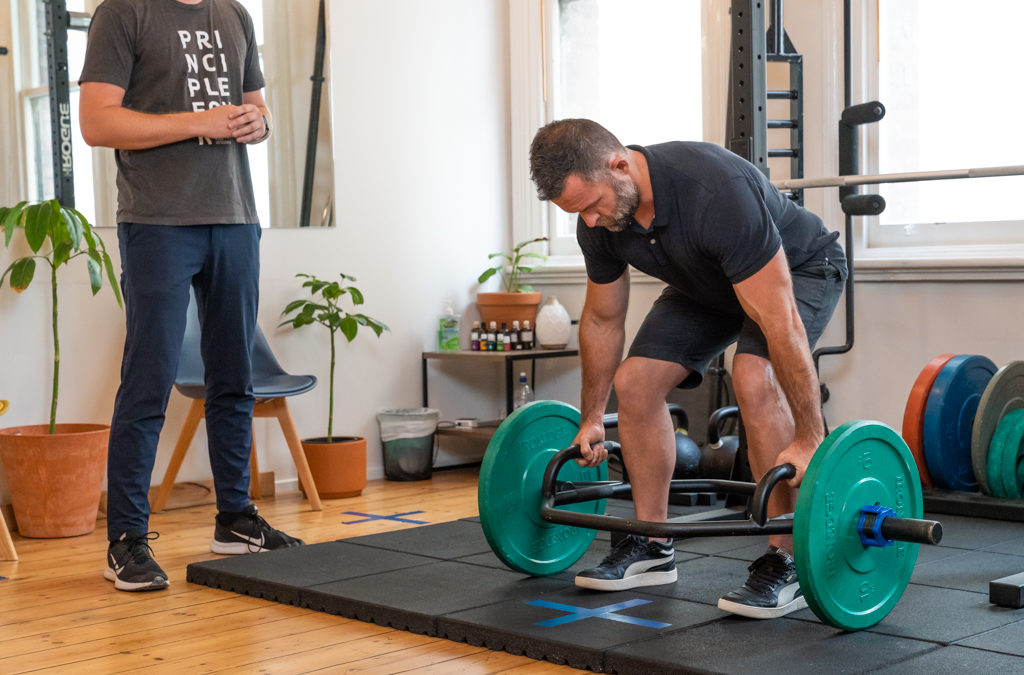
Return-to-Sport Rehabilitation
What Does Return-to-Sport Mean?
Return-to-sport is not simply being pain-free.
It involves:
-
Restoring strength and capacity
-
Tolerating sport-specific loads
-
Managing fatigue
-
Reducing re-injury risk
Returning too early or without adequate preparation is one of the strongest predictors of recurrence.
Evidence-Based Return-to-Sport Principles
Effective return-to-sport programs include:
-
Gradual exposure to sport-specific movements
-
Progressive intensity and volume
-
Monitoring symptoms and recovery
-
Ongoing strength and conditioning
Return-to-sport is a process, not a date.
The Role of Lifestyle and Workload
Sport does not exist in isolation. Recovery is influenced by:
-
Sleep
-
Stress
-
Work demands
-
Daily movement
Desk-based work and poor recovery habits can increase injury risk.
👉 Ergonomic Workstation Assessments
When Should You Seek Professional Help?
Assessment is recommended if:
-
Pain persists beyond expected timelines
-
Symptoms worsen with training
-
You experience repeated injuries
-
Performance is declining
-
Confidence with movement is reduced
Early, structured care often leads to better long-term outcomes.
Summary
Sports injuries are common, complex and rarely caused by a single issue.
By understanding injury type, respecting tissue capacity, and using progressive, evidence-based rehabilitation, most people can return to sport safely and confidently.
At Principle Four Osteopathy, we help active people recover from injury, rebuild capacity and return to the activities they enjoy — without fear-based restrictions or unnecessary limitations.
Need Help With a Sports Injury?
If you’re dealing with a sports-related injury or want guidance on safe return-to-sport: