Shockwave Therapy for Tendon Injuries: Does It Really Work?
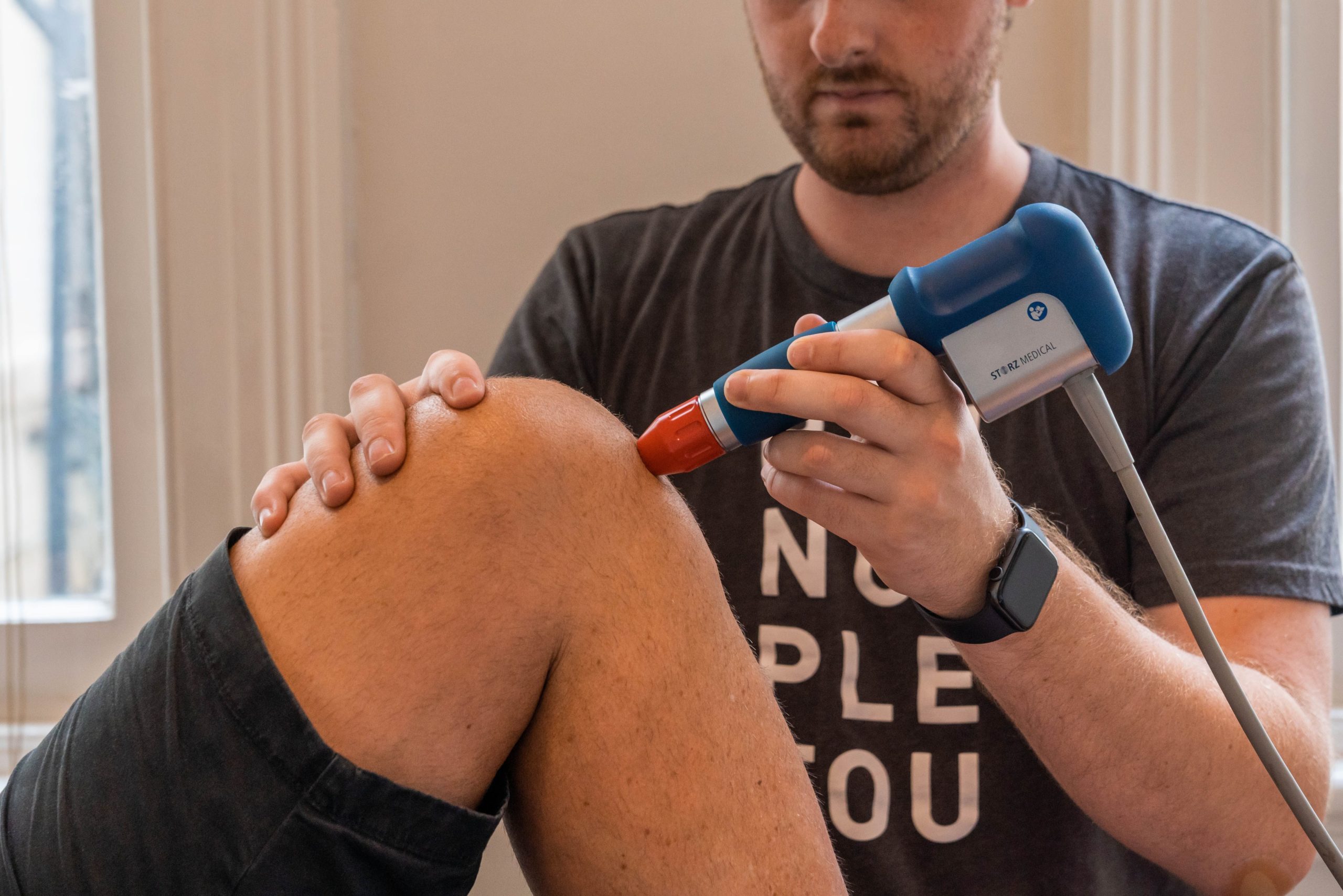
Table of Contents
- Introduction
- What Is Shockwave Therapy?
- Common Tendon Injuries We Treat
- How Shockwave Therapy Supports Healing
- Principle Four Osteopathy’s Approach
5.1 Combined Manual Therapy and Rehab
5.2 When Shockwave Is Appropriate - Benefits and Considerations
- FAQs About Shockwave Therapy
7.1 Is it painful?
7.2 How many sessions are needed?
7.3 What conditions respond best? - Author
1. Introduction
Chronic tendon injuries can significantly impact your quality of life, whether you’re a recreational runner, an office worker with repetitive strain, or recovering from a long-standing overuse condition. At Principle Four Osteopathy, we understand how frustrating tendon pain can be—especially when it doesn’t resolve with rest or general rehab. That’s where shockwave therapy may come in.
This article explores how shockwave therapy works, what conditions it helps, and how we integrate it into a broader treatment plan for long-term results.
2. What Is Shockwave Therapy?
Shockwave therapy, or extracorporeal shockwave therapy (ESWT), involves sending high-energy sound waves into musculoskeletal tissue. These waves stimulate metabolic activity, increase circulation, and encourage cellular regeneration—especially in areas where healing has stalled.
Unlike ultrasound, which delivers sound waves in a continuous mode, shockwave uses focused pulses. These waves cause micro-trauma to the tissue, which ‘kick-starts’ the body’s healing response. Over time, this process helps reduce pain and increase function.
3. Common Tendon Injuries We Treat
We typically recommend shockwave therapy for chronic conditions that haven’t responded to standard care. These include:
- Achilles tendinopathy – pain or stiffness in the back of the ankle, often worse in the morning or after activity.
- Plantar fasciitis – heel pain with first steps in the morning or after sitting.
- Patellar tendinopathy – pain at the front of the knee, often seen in jumpers and runners.
- Gluteal tendinopathy – pain on the side of the hip, aggravated by lying on that side or prolonged walking.
- Tennis/golfer’s elbow – persistent elbow pain from gripping, lifting, or desk work.
4. How Shockwave Therapy Supports Healing
When tendons become overloaded over time, they often undergo degenerative changes. Rather than inflammation, they experience micro-tears and poor collagen structure. This is why rest and anti-inflammatories alone rarely resolve the problem.
Shockwave therapy promotes:
- Angiogenesis – the formation of new blood vessels to increase oxygen and nutrient delivery.
- Cell regeneration – stimulating tendon cells (tenocytes) to rebuild healthy tissue.
- Breakdown of calcific deposits – in cases like calcific tendinopathy.
- Pain reduction – through inhibition of nerve impulses and reduced substance P levels (a pain-related neurotransmitter).
5. Principle Four Osteopathy’s Approach
5.1 Combined Manual Therapy and Rehab
Shockwave therapy is just one tool in our treatment arsenal. We integrate it with:
- Hands-on osteopathic treatment to address joint stiffness and soft tissue tension
- A tailored exercise program to reload the tendon progressively
- Movement retraining and strength programming to address biomechanical contributors
5.2 When Shockwave Is Appropriate
We generally recommend shockwave therapy for:
- Injuries lasting longer than 3 months
- Cases where standard loading programs have reached a plateau
- Clients needing a non-invasive alternative to injections or surgery
The treatment typically involves 3–6 sessions over several weeks, with effects building over time.
6. Benefits and Considerations
Benefits:
- Non-invasive, no medication or injections required
- Short treatment sessions (10–15 minutes)
- Safe and evidence-based for tendon conditions
Considerations:
- Some discomfort during treatment is normal and temporary
- Mild bruising or soreness can occur for 1–2 days post-treatment
- Best results occur when combined with active rehab
7. FAQs About Shockwave Therapy
7.1 Is it painful?
You may feel mild to moderate discomfort during treatment—similar to a dull ache or vibration—but we adjust intensity based on tolerance.
7.2 How many sessions are needed?
Most people benefit from 3–6 sessions spaced weekly, depending on their condition.
7.3 What conditions respond best?
Chronic tendon problems like plantar fasciitis, Achilles tendinopathy, and tennis elbow show strong responses in clinical studies.
8. Author
Heath Williams
Principal Osteopath, Strength & Conditioning Coach
Heath specialises in the management of complex tendon injuries and integrates modern rehab techniques with hands-on therapy. His training in workplace and athletic performance gives him a unique perspective on injury prevention and recovery.
Meta Description: Learn how shockwave therapy treats chronic tendon pain. Discover how our Melbourne CBD osteopaths use it alongside rehab for long-term results.
Page URL: www.principle4.com.au/blog/shockwave-therapy-tendon-injuries**: www.principle4.com.au/blog/shockwave-therapy-tendon-injuries