Chronic & Complex Pain Conditions: Understanding Persistent Pain and How We Can Help
Living with ongoing pain can be frustrating, exhausting and confusing — particularly when scans are “normal,” treatments haven’t provided lasting relief, or symptoms keep flaring without a clear reason.
At Principle Four Osteopathy, we work with many people experiencing chronic and complex pain conditions, including persistent pain, long-standing injuries with repeated flare-ups, and pain influenced by stress, workload or fatigue.
This article explains why pain can persist, what chronic pain actually means, and how a structured, evidence-based approach can help restore function and confidence.
What Are Chronic and Complex Pain Conditions?
Chronic or persistent pain is generally defined as pain that lasts longer than expected tissue healing times, often beyond 3–6 months.
Complex pain presentations may include:
-
Pain that fluctuates without a clear mechanical cause
-
Symptoms that spread or change location
-
Pain that worsens during periods of stress or fatigue
-
Injuries that “never fully settle”
-
Repeated flare-ups despite rest or treatment
Importantly, persistent pain does not automatically mean ongoing tissue damage.
Persistent Pain: Why Doesn’t It Just Go Away?
Pain is not a direct measure of tissue damage. Instead, it is an output of the nervous system influenced by multiple factors.
In persistent pain, the nervous system can become more sensitive over time, meaning pain is experienced even when tissues are safe to load.
Factors commonly involved include:
-
Previous injury or trauma
-
Ongoing stress or high workload
-
Poor sleep or recovery
-
Reduced physical capacity
-
Fear of movement due to past pain experiences
This does not mean pain is “in your head” — it means the system has become protective, often excessively so.
Pain With No Clear Structural Cause
Many people with chronic pain are told:
-
“Your scans are normal”
-
“There’s nothing wrong structurally”
-
“You just need to live with it”
While imaging can rule out serious pathology, it often does not explain pain, especially in long-standing conditions.
Research consistently shows that:
-
Structural changes are common in pain-free people
-
Pain can exist without visible tissue damage
-
Imaging findings often correlate poorly with symptoms
Understanding this can be reassuring and is often the first step toward recovery.
The Role of Stress, Workload and Fatigue in Pain
Stress, workload and fatigue play a significant role in persistent pain by influencing:
-
Muscle tone and tension
-
Recovery capacity
-
Pain sensitivity
-
Sleep quality
-
Ability to cope with load
Desk-based work, long hours, cognitive load and poor recovery can all amplify symptoms — even when tissues are not injured.
This is why chronic pain often fluctuates during:
-
Busy work periods
-
Poor sleep weeks
-
Emotional or mental stress
-
Increased life demands
👉Postural Strain & Desk-Related Pain
Long-Standing Injuries With Repeated Flare-Ups
Repeated flare-ups are common in chronic pain and do not mean you are “back to square one.”
Flare-ups often occur due to:
-
Sudden increases in activity
-
Reduced recovery or sleep
-
Stress accumulation
-
Deconditioning or strength loss
-
Avoidance of certain movements over time
Understanding flare-ups as temporary sensitivity spikes, rather than re-injury, is key to long-term improvement.
How We Help at Principle Four Osteopathy
We take a whole-person, evidence-informed approach to chronic and complex pain.
Our goal is not just symptom relief, but restoring movement confidence, capacity and quality of life.
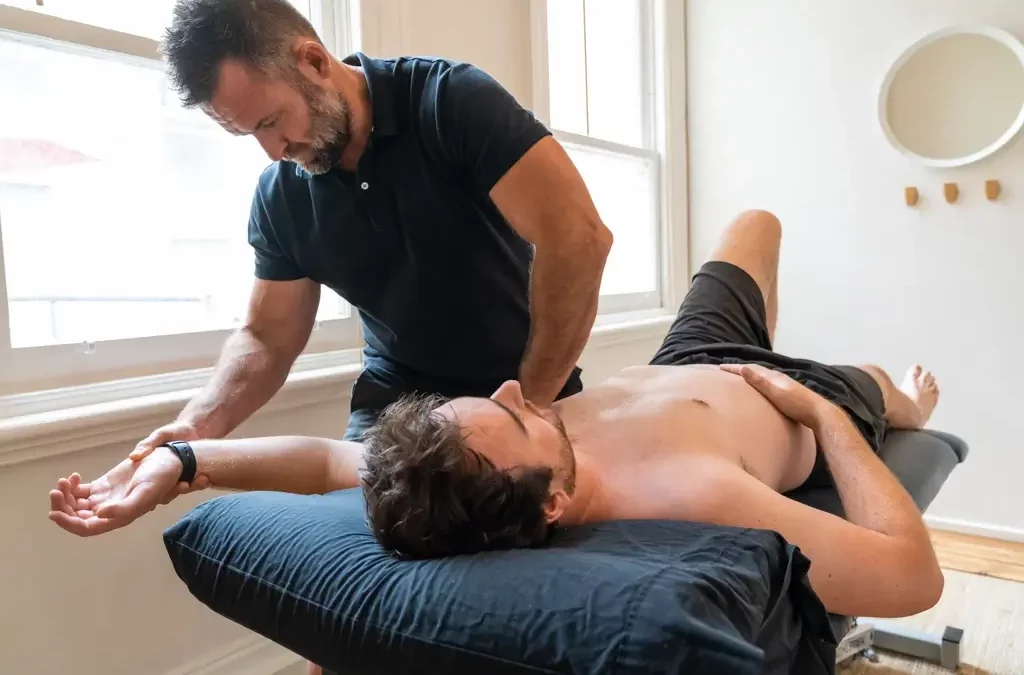
Osteopathy for Persistent Pain
Osteopathy can assist by:
-
Improving joint and soft-tissue mobility
-
Reducing protective muscle tension
-
Supporting comfortable movement
-
Helping reintroduce movement safely
Hands-on treatment is used as a supportive tool, not a standalone solution.
👉 Osteopathy Services Melbourne CBD
Movement Assessment and Education
Understanding how you move — and how pain has influenced your movement habits — is critical.
Assessment helps identify:
-
Guarded or avoidant movement patterns
-
Areas of reduced capacity
-
Compensations contributing to overload
Education around pain mechanisms helps reduce fear and improve confidence.
Exercise Rehabilitation
Exercise rehabilitation plays a central role in managing persistent pain.
Programs are designed to:
-
Gradually rebuild strength and tolerance
-
Improve movement confidence
-
Desensitise the nervous system to safe load
-
Restore function in daily life and sport
Exercise is progressed within tolerance, not pushed aggressively.
Strength & Conditioning for Long-Term Resilience
Strength and conditioning helps:
-
Improve physical robustness
-
Reduce flare-up frequency
-
Increase tolerance to daily and work demands
-
Support long-term pain management
Strength does not worsen chronic pain when appropriately prescribed — it often improves it.
Ergonomics and Load Management
Work posture and daily load play a major role in persistent pain.
Ergonomic assessments help:
-
Reduce unnecessary strain
-
Improve comfort at work
-
Support recovery during the day
👉 Ergonomic Workstation Assessments
What Recovery Looks Like With Chronic Pain
Recovery from persistent pain is rarely linear.
Progress often includes:
-
Improved confidence with movement
-
Reduced flare-up intensity
-
Faster recovery from symptom spikes
-
Increased activity tolerance
-
Better understanding of triggers
Pain reduction is important — but improved function and confidence are often the first major wins.
When Should You Seek Help?
You should consider professional support if:
-
Pain has lasted longer than expected
-
Symptoms fluctuate without clear cause
-
Scans or treatments haven’t provided answers
-
Pain limits work, sleep or activity
-
Fear of movement is developing
Early guidance often prevents further deconditioning and frustration.
Summary
Chronic and complex pain conditions are common, multifactorial and highly manageable with the right approach.
Persistent pain does not mean damage, and long-standing symptoms do not mean you are broken.
At Principle Four Osteopathy, we help people with complex pain rebuild confidence, restore movement capacity and return to the activities that matter — using evidence-based, compassionate care without fear-driven messaging.
Need Help With Persistent or Complex Pain?
If you’re dealing with long-standing pain, repeated flare-ups or symptoms without a clear cause: